2025 State Unemployment Benefits: Your Financial Security Ranking

Anúncios
Understanding 2025 state unemployment benefits is crucial for financial planning, as eligibility, weekly payouts, and duration differ significantly across states, directly impacting an individual’s financial stability during periods of joblessness.
Anúncios
Navigating the complexities of unemployment can be daunting, but understanding the support systems in place is a vital first step. When facing unexpected job loss, knowing what to expect from your state’s unemployment insurance program can make a significant difference in your financial well-being. This article delves into 2025 state unemployment benefits, offering a comprehensive look at how different states compare and what these variations mean for your financial security.
Understanding the Basics of Unemployment Insurance
Unemployment insurance (UI) is a joint federal and state program designed to provide temporary financial assistance to eligible workers who are unemployed through no fault of their own. While the federal government establishes broad guidelines, each state administers its own program, leading to considerable differences in benefits, eligibility, and duration. These state-specific rules are critical for anyone seeking support in 2025.
Anúncios
Eligibility Requirements Across States
To qualify for unemployment benefits, individuals generally must meet specific criteria. These often include a minimum amount of earnings during a ‘base period’ before becoming unemployed, and they must be actively seeking work. However, the exact thresholds and definitions of these terms can vary significantly from one state to another.
- Wage Requirements: Most states require you to have earned a certain amount of wages during a designated base period, typically the first four of the last five completed calendar quarters before filing your claim.
- Reason for Separation: You must generally be unemployed through no fault of your own, meaning you were laid off or your job was eliminated, rather than being fired for misconduct or voluntarily quitting without good cause.
- Availability for Work: Claimants must be able and available to work and actively seeking new employment. Some states have stricter requirements for documenting job search efforts than others.
Understanding these foundational requirements is paramount. A seemingly minor difference in how a state defines ‘good cause’ for quitting or the specific wage thresholds can determine whether an individual receives benefits or not. It’s not just about the payout; it’s about the initial hurdle of qualification.
Benefit Duration and Weekly Amounts
The duration and weekly benefit amounts are perhaps the most impactful differences between state UI programs. While most states offer a maximum of 26 weeks of benefits, some provide fewer, and a few occasionally extend beyond this standard, especially during economic downturns. The weekly benefit amount is often a percentage of your past earnings, up to a certain maximum, which also varies wildly.
In conclusion, the basic framework of unemployment insurance is consistent across the nation, yet its practical application differs starkly. From the specific eligibility hurdles to the financial relief offered, state-level variations in UI programs for 2025 necessitate a detailed understanding for anyone potentially relying on these benefits for financial stability.
State-by-State Comparison of Weekly Benefit Amounts in 2025
When considering financial security during unemployment, the weekly benefit amount is often the most critical factor. This figure, determined by state law, can significantly impact an individual’s ability to cover essential living expenses. In 2025, these amounts continue to present a wide spectrum across the United States, reflecting diverse economic conditions and policy priorities.
High-Benefit States: Where the Payouts are More Generous
Certain states consistently offer higher maximum weekly benefits, providing a more robust safety net for their residents. These states often have higher costs of living or more progressive social welfare policies. Understanding which states fall into this category can be crucial for those considering relocation or who live in areas with higher expenses.
- Top-Tier States: States like Massachusetts, Washington, and New Jersey typically feature some of the highest maximum weekly benefit amounts, often exceeding $700-$800.
- Factors Influencing High Benefits: Higher average wages within the state, stronger union presence, and a commitment to maintaining a higher standard of living for unemployed workers contribute to these figures.
- Impact on Financial Security: In these states, unemployment benefits can replace a more substantial portion of an individual’s lost income, offering greater financial stability during job searching.
The difference between a high-benefit state and a low-benefit state can translate into hundreds of dollars per week, which can be the margin between maintaining financial obligations and falling into hardship.
Lower-Benefit States: Challenges and Considerations
Conversely, many states offer considerably lower maximum weekly benefits. While these states might have a lower cost of living, the reduced benefit amounts can still pose significant challenges for unemployed individuals, sometimes barely covering basic necessities.
States such as Mississippi, Alabama, and Arizona tend to have lower maximum weekly benefits, often ranging from $200-$300. This disparity highlights the need for individuals in these regions to have more robust emergency savings or alternative income strategies. The lower benefit levels can force difficult financial decisions, potentially accelerating the need to accept any available job, even if it’s not a good fit or doesn’t utilize their skills.
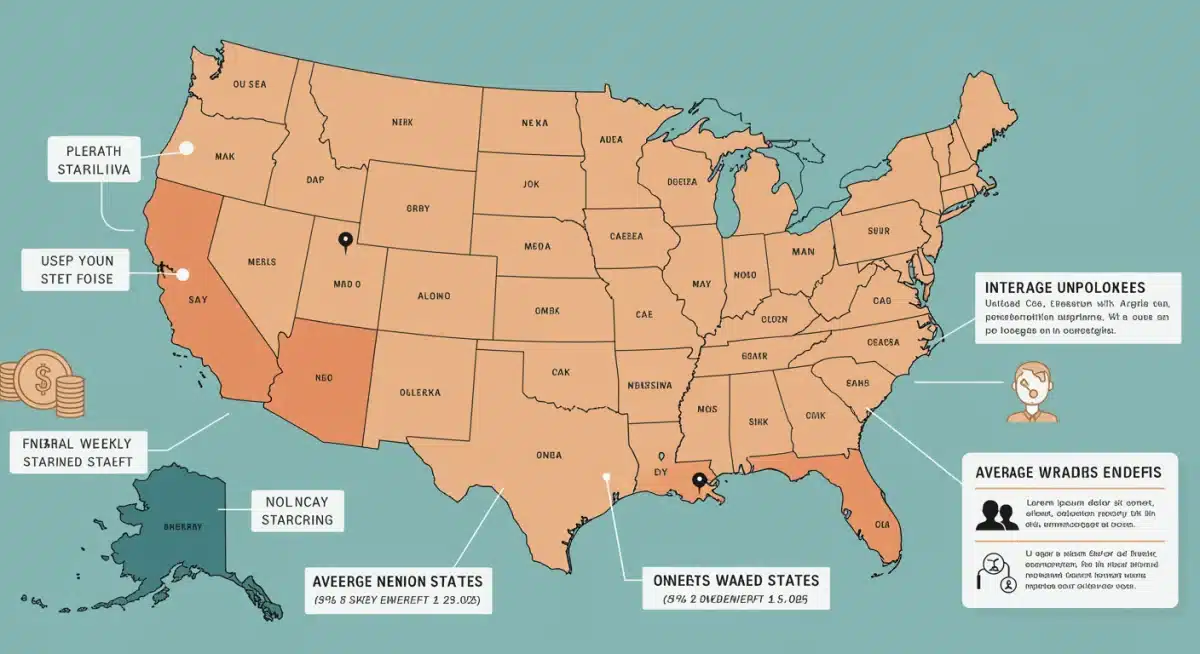
In summary, the variation in weekly benefit amounts across states in 2025 is a critical aspect of unemployment insurance. It significantly influences the financial safety net available to individuals and underscores the importance of understanding your state’s specific provisions.
Duration of Benefits: How Long Can You Rely on Support?
Beyond the weekly payout, the duration for which unemployment benefits are received is a crucial factor in determining long-term financial security during joblessness. This period can vary, offering a longer or shorter runway for individuals to find new employment without severe financial distress.
Standard and Extended Benefit Periods
The standard duration for unemployment benefits in most states is 26 weeks. This period is intended to provide a reasonable amount of time for individuals to transition between jobs. However, this is not a universal rule, and some states deviate from this standard.
- Variations from the Norm: A few states, like Florida and North Carolina, have historically offered fewer than 26 weeks, sometimes tying the duration to the state’s unemployment rate.
- Extended Benefits Programs: During periods of high unemployment, federal law allows for extended benefits programs, which can add additional weeks of compensation. These programs are typically triggered when a state’s insured unemployment rate reaches certain thresholds.
- Impact of Economic Conditions: The availability and length of extended benefits are highly dependent on the overall economic climate and specific state-level unemployment figures.
Understanding these potential extensions or reductions is vital for financial planning. Relying solely on the standard 26 weeks without considering state-specific rules or economic triggers can lead to unexpected financial cliffs.
Strategic Planning for Benefit Duration
Knowing your state’s typical duration for unemployment benefits allows for more effective financial planning. If your state offers a shorter benefit period, it emphasizes the need for a more aggressive job search or a larger emergency fund.
For those in states with a longer standard duration, there might be a bit more breathing room, but it’s never wise to become complacent. The goal of unemployment benefits is temporary assistance, not a long-term solution. Therefore, regardless of the duration, a proactive approach to re-employment remains essential. The duration of benefits directly impacts the urgency and strategy of a job search, highlighting the need for individuals to be well-informed about their state’s specific policies in 2025.
In summary, the length of time an individual can receive unemployment benefits is as significant as the weekly amount. State variations in duration, coupled with the potential for extended benefits during economic downturns, underscore the need for careful financial planning and a proactive job search strategy.
Impact of State Economic Factors on Unemployment Benefits
The economic landscape of a state plays a significant role in shaping its unemployment benefit structure. Factors such as the prevailing wage levels, industry composition, and overall economic stability directly influence both the design and the funding of state unemployment insurance programs. These factors contribute to the variations seen in 2025 state unemployment benefits.
Wage Levels and Benefit Calculations
Unemployment benefits are typically calculated as a percentage of a claimant’s past wages, up to a state-defined maximum. In states with higher average wages, the maximum weekly benefit tends to be higher to reflect the higher cost of living and income levels of its workforce.
- High-Wage States: States like California and New York, with generally higher wage scales, often have higher maximum weekly benefit caps, allowing benefits to replace a larger portion of a higher earner’s income.
- Low-Wage States: Conversely, states with lower average wages will typically have lower maximum benefit amounts, which can pose a greater challenge for individuals trying to meet their financial obligations.
- Impact on Replacement Rate: The goal of UI is to replace a portion of lost wages, but the actual replacement rate can vary significantly depending on both the individual’s past earnings and the state’s benefit structure.
This direct correlation between state wage levels and benefit calculations means that an individual earning the same amount in two different states could receive vastly different unemployment payouts.
Industry Composition and Economic Stability
The dominant industries within a state also influence its UI system. States with a diverse industrial base may experience more stable unemployment rates, potentially allowing for more consistent benefit structures. States heavily reliant on a single industry, which can be prone to boom-and-bust cycles, might see more fluctuations in their UI funds and benefit policies.
Furthermore, a state’s overall economic stability, including its unemployment rate and the health of its unemployment trust fund, can impact policy decisions regarding benefit levels and duration. A robust trust fund, often built during periods of low unemployment, provides the financial cushion to maintain benefits during economic downturns. Conversely, a depleted fund might lead to calls for reduced benefits or stricter eligibility.
In conclusion, state economic factors are deeply intertwined with unemployment benefit structures. Wage levels dictate potential payouts, while industry composition and economic stability influence the program’s overall resilience and generosity, making these considerations crucial for understanding 2025 state unemployment benefits.
Eligibility and Application Process: Navigating the System
Beyond understanding the potential financial benefits, knowing the specific eligibility criteria and the application process in your state is paramount. Even with generous benefits, a misstep in the application can lead to delays or outright denial. Each state has its own nuances that applicants must navigate carefully in 2025.
Key Eligibility Criteria to Know
While federal guidelines provide a general framework, states implement specific rules regarding who qualifies for unemployment benefits. These often revolve around a claimant’s work history and the circumstances of their job separation.
- Work History Requirements: States typically require a minimum amount of work and earnings during a ‘base period.’ This ensures that benefits are paid to those with a recent attachment to the workforce. The specific earnings and quarterly breakdown can vary.
- Reason for Job Separation: Generally, you must be unemployed through no fault of your own. This means layoffs, company closures, or reductions in force usually qualify. Voluntary quits or terminations for misconduct are often disqualifying, though exceptions exist for ‘good cause’ quits.
- Ability and Availability: To receive benefits, you must be physically and mentally able to work and actively available for suitable employment. Some states may require you to register with their employment services.
It’s crucial to review your state’s specific Department of Labor or Employment Security website for the precise requirements, as these can be updated annually.
The Application Process: Step-by-Step
The application process for unemployment benefits typically involves several steps, usually initiated online. Understanding these steps can help expedite your claim and avoid common pitfalls.
First, gather all necessary documentation, including your Social Security number, driver’s license or state ID, employment history for the past 18 months, and details about your last employer. Most states allow you to file your initial claim online, which is often the quickest and most efficient method. After filing, your claim will be reviewed, and both you and your former employer may be contacted for more information. You will then typically need to file weekly or bi-weekly certifications, attesting to your continued unemployment, job search efforts, and eligibility. Failure to file these certifications can result in delays or loss of benefits.
In summary, successfully navigating the unemployment system requires more than just knowing what benefits are available; it demands a thorough understanding of your state’s specific eligibility rules and a diligent approach to the application and certification process. This proactive engagement is key to securing 2025 state unemployment benefits.
Maximizing Your Financial Security During Unemployment
Unemployment, regardless of the benefit amount, presents a significant financial challenge. Proactive planning and strategic decision-making are essential to maximize your financial security and minimize stress during this transition period. Understanding your 2025 state unemployment benefits is just one piece of a larger financial puzzle.
Building an Emergency Fund
The most robust defense against the financial strain of unemployment is a well-funded emergency savings account. Financial experts typically recommend having at least three to six months’ worth of living expenses saved. This fund acts as a crucial buffer, supplementing unemployment benefits or covering expenses if benefits are delayed or insufficient.
- Calculate Your Monthly Expenses: Accurately assess your essential monthly expenditures, including housing, utilities, food, transportation, and healthcare.
- Set a Realistic Goal: Aim for a savings target that aligns with your financial obligations and potential benefit shortfalls.
- Automate Savings: Set up automatic transfers to your emergency fund to build it consistently over time, making it a priority before job loss occurs.
An emergency fund provides peace of mind and allows for a more considered job search, rather than being forced to accept the first available position out of desperation.
Budgeting and Expense Reduction Strategies
During unemployment, meticulous budgeting becomes more critical than ever. It’s an opportunity to re-evaluate spending habits and identify areas where expenses can be reduced or eliminated.
Start by creating a detailed budget that tracks all income (including unemployment benefits) and expenses. Prioritize essential spending and cut back on discretionary items. Consider temporary adjustments like canceling subscriptions, reducing dining out, or finding more affordable alternatives for entertainment. Exploring options for deferring loan payments or negotiating with creditors can also provide temporary relief. Many utility companies and service providers offer hardship programs that can help reduce monthly costs during difficult times.
In conclusion, while unemployment benefits offer a temporary lifeline, true financial security during joblessness comes from a combination of preparedness and prudent money management. Building an emergency fund and implementing strict budgeting strategies are key to navigating unemployment with greater stability, regardless of your state’s specific 2025 unemployment benefits.
The Future of Unemployment Benefits and Policy Trends
Unemployment insurance programs are not static; they evolve in response to economic shifts, technological advancements, and policy debates. Looking ahead to 2025 and beyond, several trends and potential policy changes could reshape the landscape of unemployment benefits, impacting how individuals experience financial security during periods of job loss.
Potential Federal and State Reforms
There is ongoing discussion at both federal and state levels about modernizing unemployment insurance. This includes debates over expanding eligibility to cover more types of workers, such as gig economy employees, and adjusting benefit formulas to better reflect current economic realities and cost of living. Some proposals also focus on strengthening the solvency of state UI trust funds.
- Gig Worker Inclusion: Many states are exploring ways to extend UI coverage to independent contractors and gig workers, who are currently often excluded from traditional unemployment benefits.
- Benefit Adequacy: Discussions are underway about increasing maximum weekly benefit amounts and adjusting them for inflation, ensuring they provide a more adequate living wage.
- Trust Fund Solvency: Efforts to stabilize and strengthen state unemployment trust funds are key to ensuring that benefits can be paid consistently, even during severe economic downturns.
These potential reforms could significantly alter who qualifies for benefits and how much they receive, making it crucial for individuals to stay informed about legislative developments.
Technological Advancements and Streamlined Processes
Technology is increasingly playing a role in improving the efficiency and accessibility of unemployment benefit systems. States are investing in modernized IT infrastructure to streamline application processes, reduce processing times, and enhance communication with claimants.
Digital portals, AI-powered chatbots for initial inquiries, and improved online identity verification systems are examples of how technology is being leveraged. While these advancements aim to make the system more user-friendly, they also require claimants to be comfortable with digital platforms. Challenges remain in ensuring equitable access for all, including those with limited digital literacy or internet access. The integration of technology can also lead to more sophisticated fraud detection, which, while beneficial, can sometimes create hurdles for legitimate claimants.
In conclusion, the future of unemployment benefits is likely to be characterized by continued reform efforts aimed at expanding coverage and improving adequacy, alongside technological advancements designed to enhance efficiency. Staying abreast of these evolving trends will be essential for understanding the landscape of 2025 state unemployment benefits and beyond.
| Key Aspect | Brief Description |
|---|---|
| State Variation | Eligibility, weekly amounts, and duration of unemployment benefits differ significantly by state. |
| Weekly Payouts | Maximum weekly benefits in 2025 range widely, from under $300 to over $800, impacting financial stability. |
| Benefit Duration | Most states offer 26 weeks, but some provide fewer, influencing job search urgency. |
| Financial Planning | Emergency funds and strict budgeting are crucial for maximizing security alongside benefits. |
Frequently Asked Questions About 2025 Unemployment Benefits
To determine your state’s specific 2025 unemployment benefit amounts, you should visit your state’s Department of Labor or Employment Security website. These official government sites provide the most up-to-date information on maximum weekly benefits, eligibility criteria, and benefit duration, which can vary annually based on state legislation and economic conditions.
If you move to a different state after becoming unemployed, you typically file your unemployment claim with the state where you earned the wages that will be used to establish your claim. Some states have interstate claim procedures, but generally, the rules of the state where you worked will apply regarding eligibility and benefit calculations.
Yes, unemployment benefits are considered taxable income by the federal government and most state governments. You will receive a Form 1099-G from your state unemployment agency, reporting the total amount of benefits paid to you during the year. It’s advisable to have federal and state taxes withheld from your payments to avoid a large tax bill later.
In most states, you can work part-time and still receive a reduced amount of unemployment benefits. States typically allow you to earn a certain amount without affecting your full benefit, or they will reduce your weekly benefit dollar-for-dollar by a percentage of your earnings. You must report all earnings to your state unemployment agency.
If your regular unemployment benefits run out before you find a new job, you may be eligible for extended benefits during periods of high unemployment, if such programs are active in your state or nationally. Otherwise, you would need to rely on personal savings, explore other assistance programs, or seek immediate employment to cover your expenses.
Conclusion
Understanding the nuances of 2025 state unemployment benefits is not merely an academic exercise; it is a critical component of personal financial planning and resilience. The significant variations across states in terms of eligibility, weekly payouts, and duration mean that your location directly impacts the safety net available to you during job loss. By proactively researching your state’s specific provisions, building a robust emergency fund, and adhering to diligent budgeting practices, individuals can significantly enhance their financial security. As policies continue to evolve, staying informed about potential reforms and technological advancements will also be key to navigating the future of unemployment support effectively.