Navigating 2025 FAFSA Changes: Essential Updates for US Students

Anúncios
The 2025 FAFSA overhaul streamlines the financial aid application, with significant changes like the Student Aid Index (SAI) replacing the Expected Family Contribution (EFC) and expanded eligibility for Pell Grants, aiming to simplify access to federal student aid.
For millions of college-bound students across the United States, securing financial aid is a pivotal step towards realizing their educational aspirations. Understanding the intricacies of the Free Application for Federal Student Aid (FAFSA) is paramount. The Navigating 2025 FAFSA Changes: Essential Updates for College-Bound Students in the US is not merely an annual ritual; it represents a significant overhaul designed to simplify the process and potentially expand eligibility for federal student aid. This comprehensive guide will delve into these critical updates, offering practical solutions and insights to help you confidently navigate the path to college funding.
Anúncios
Understanding the FAFSA Simplification Act
The FAFSA Simplification Act marks the most substantial transformation to federal student aid in decades. This legislative effort aims to streamline the application process, make financial aid more accessible, and provide a clearer picture of a student’s aid eligibility. These changes are not just procedural; they have profound implications for how aid is calculated and distributed, impacting countless families nationwide.
Anúncios
At its core, the Act seeks to reduce the complexity that often deterred applicants from completing the FAFSA. The previous form was notoriously long and confusing, leading to many eligible students missing out on aid simply due to the application’s daunting nature. The new framework is designed to be more user-friendly, encouraging a broader range of students to apply for the assistance they need.
Key Changes Introduced by the Act
Several fundamental shifts underpin the FAFSA Simplification Act, each designed to improve the student aid experience. Understanding these specific changes is crucial for anyone planning to apply for federal financial aid in 2025 and beyond.
- Replaced EFC with SAI: The Expected Family Contribution (EFC) has been replaced by the Student Aid Index (SAI). This new index provides a more nuanced assessment of a family’s ability to pay for college.
- Expanded Pell Grant Eligibility: More students will qualify for Pell Grants, and the maximum Pell Grant amount will be linked to inflation, providing greater purchasing power.
- Simplified Application: The number of questions on the FAFSA form has been significantly reduced, making it quicker and easier to complete.
These changes collectively aim to create a more equitable and efficient system for distributing federal student aid. By simplifying the application and recalibrating eligibility metrics, the Act endeavors to ensure that financial barriers do not unduly prevent deserving students from pursuing higher education.
The New Student Aid Index (SAI): What You Need to Know
One of the most significant changes introduced by the FAFSA Simplification Act is the replacement of the Expected Family Contribution (EFC) with the Student Aid Index (SAI). This shift is more than just a name change; it represents a fundamental rethinking of how a family’s financial strength is assessed and how much federal student aid a student is eligible to receive.
The EFC, often a source of confusion, was a dollar amount that colleges used to determine aid. The SAI, by contrast, can be a negative number, ranging from -1500 to 999999. A negative SAI indicates a higher level of financial need, potentially leading to more federal aid. This new calculation methodology is designed to be more transparent and reflective of a family’s true financial capacity.
How the SAI is Calculated
The calculation of the SAI involves several factors, with some key differences from the previous EFC methodology. It considers income, assets, and family size, but with updated weighting and exclusions. Understanding these components is vital for estimating your potential aid.
- Income Assessment: The SAI still primarily relies on income, but certain income types are now excluded, offering a more favorable calculation for some families.
- Asset Protections: The asset protection allowance has increased, meaning more families can shelter a larger portion of their assets without it negatively impacting their SAI.
- Family Size and Poverty Levels: The SAI calculation better accounts for family size and links directly to federal poverty levels, potentially increasing aid for larger, lower-income families.
A notable change is the elimination of the number of family members in college as a factor in the SAI calculation. While this might seem counterintuitive, it aims to distribute aid more equitably across all students, regardless of how many siblings are also pursuing higher education. Families with multiple children in college may see a change in their aid package compared to previous years, necessitating careful planning.
The transition to the SAI is intended to provide a more accurate and consistent measure of a student’s financial need. By adjusting how income and assets are weighed, and by offering greater protections for certain financial situations, the new system aims to allocate federal aid more effectively to those who need it most. It’s crucial for applicants to familiarize themselves with these new calculation methods to understand their potential eligibility.
Expanded Pell Grant Eligibility and Benefits
The FAFSA Simplification Act brings exciting news for students seeking Pell Grants, as it significantly expands eligibility and aims to make this crucial federal aid more impactful. Pell Grants, unlike loans, do not need to be repaid, making them a cornerstone of college affordability for many low-income and middle-income students. The changes are designed to ensure that more students can access this vital financial support.
Under the new rules, more students will qualify for the maximum Pell Grant award. This is primarily due to the direct linkage of Pell Grant eligibility to federal poverty levels and the new, more favorable SAI calculation. This expansion is a direct effort to increase access to higher education for a broader segment of the population, reducing financial barriers that might otherwise prevent students from attending college.
How Pell Grant Eligibility is Determined Now
The new method for determining Pell Grant eligibility is more straightforward and aims for greater equity. Instead of relying solely on the EFC, the system now takes into account family size and adjusted gross income (AGI) in relation to the federal poverty line, offering a clearer pathway to aid.
- Maximum Pell Grant: Students from families whose AGI is at or below 225% of the federal poverty line (for single parents) or 175% (for all other families) will automatically qualify for the maximum Pell Grant.
- Minimum Pell Grant: Eligibility for a minimum Pell Grant is also expanded, extending to students whose AGI falls within a certain percentage above the poverty line, depending on family size.
- Year-Round Pell: The option for year-round Pell Grants remains, allowing eligible students to receive up to 150% of their scheduled Pell Grant award over an academic year, facilitating faster degree completion.
These changes mean that a greater number of students will likely see themselves qualify for some level of Pell Grant assistance, and for many, the amount received will be more substantial. This is a significant step towards making college more affordable and accessible, particularly for students from disadvantaged backgrounds. Families should review the new income thresholds and their specific financial situation to understand their potential Pell Grant eligibility.
Simplified FAFSA Application Process
Beyond the changes to eligibility calculations, one of the most welcomed updates is the simplification of the FAFSA application itself. The notoriously lengthy and often confusing form has been streamlined, reducing the number of questions and making it more intuitive for applicants to complete. This simplification is expected to encourage more students to apply for financial aid, removing a significant hurdle that previously deterred many.
The goal is to make the application process less intimidating and time-consuming. A shorter, clearer form means less room for error and less frustration for students and their families. This efficiency gain is not just about convenience; it’s about ensuring that the path to financial aid is as smooth as possible, allowing students to focus on their academic pursuits rather than bureaucratic complexities.
Key Improvements in the Application Form
The revamped FAFSA form incorporates several user-friendly features and structural changes designed to enhance the overall application experience. These improvements reflect a commitment to making federal student aid more accessible and less burdensome.
- Fewer Questions: The number of questions has been reduced from over 100 to approximately 36, drastically cutting down the time required to complete the form.
- Direct Data Exchange with IRS: A mandatory direct data exchange with the IRS will automatically transfer tax information, reducing manual entry errors and simplifying the process for most applicants.
- Expanded Contributor Definition: The term “contributor” now includes anyone required to provide information on the FAFSA (e.g., parents, stepparents), ensuring clarity on who needs to participate.
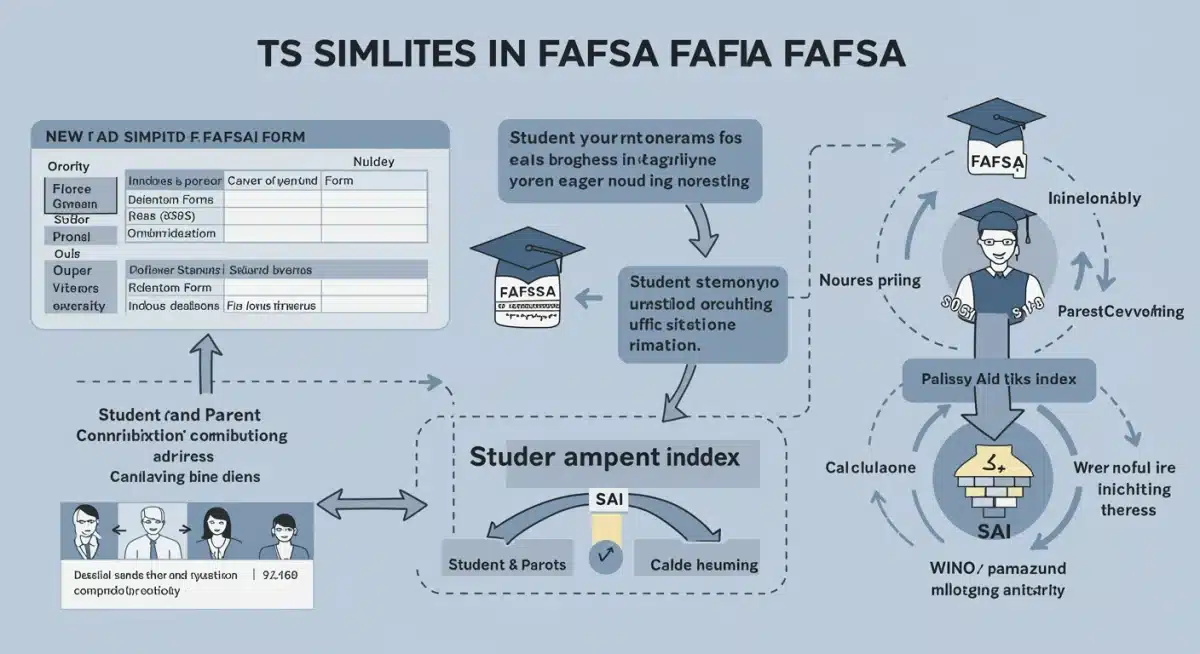
The requirement for all contributors to provide consent for federal tax information retrieval directly from the IRS is a critical aspect of the new process. This not only simplifies data entry but also ensures accuracy and reduces the likelihood of discrepancies that could delay aid processing. While this may require some initial adjustment, it ultimately makes the application more secure and efficient. The simplified FAFSA is a significant step forward in making financial aid more attainable for all eligible students.
Practical Solutions for College-Bound Students
With these significant FAFSA changes, college-bound students need to adopt new strategies to maximize their financial aid opportunities. Proactive planning and a clear understanding of the updated process are more important than ever. It’s not just about filling out the form; it’s about understanding how your financial situation interacts with the new rules to secure the best possible aid package.
The shift to the SAI and the expanded Pell Grant eligibility present both opportunities and challenges. Students and families who prepare adequately will be better positioned to navigate these changes successfully. This involves not only understanding the mechanics of the new FAFSA but also exploring all available resources and avenues for financial support.
Tips for Maximizing Your Aid Potential
Strategic approaches can significantly impact the amount of financial aid you receive. These tips go beyond simply completing the FAFSA and delve into broader financial planning and application strategies.
- File Early: While the FAFSA is simpler, filing as soon as it opens remains crucial, as some aid is awarded on a first-come, first-served basis.
- Understand Your SAI: Familiarize yourself with the SAI calculation to anticipate your eligibility and discuss it with financial aid officers if needed.
- Explore All Aid Types: Don’t just focus on federal aid. Research state grants, institutional scholarships, and private scholarships which can significantly supplement federal assistance.
- Seek Professional Guidance: Consider consulting with a financial aid advisor who can offer personalized advice based on your unique circumstances.
Beyond federal aid, remember to explore state-specific programs and institutional grants offered by colleges. Many universities have their own financial aid applications and scholarship opportunities that can complement federal aid. Additionally, external scholarships from private organizations, foundations, and community groups can provide substantial support. A holistic approach to financial aid, combining federal, state, institutional, and private sources, is often the most effective strategy for covering college costs.
Addressing Common Concerns and Misconceptions
The introduction of such sweeping changes inevitably brings about questions and potential misunderstandings. It’s crucial for students and families to distinguish between accurate information and common misconceptions to avoid errors and ensure a smooth application process. Addressing these concerns head-on can alleviate anxiety and empower applicants with correct knowledge.
One common concern revolves around the direct data exchange with the IRS. While a mandatory step for most, some applicants worry about privacy or the accuracy of transferred data. It’s important to understand that this system is designed to enhance security and accuracy, reducing the burden on applicants to manually input sensitive financial information.
Clarifying Key Aspects of the New FAFSA
Dispelling myths and providing clear answers to frequently asked questions is essential for a successful application season. Here are some clarifications regarding key aspects of the 2025 FAFSA changes.
- No Impact on CSS Profile: The FAFSA changes do not directly impact the CSS Profile, which is used by some private colleges for non-federal aid. If applying to such schools, you’ll still need to complete both forms.
- Parental Information for Divorced Parents: The new FAFSA now requires financial information from the parent who provides the most financial support, regardless of which parent the student lives with most of the time. This is a significant change from previous years.
- Small Business and Farm Assets: For the first time, the value of small businesses (those with fewer than 100 full-time employees) and family farms will be included in the asset calculation, which could impact some families’ SAI.
Another area of concern for some families is the inclusion of small business and farm assets in the SAI calculation. While this change might affect some, it’s important to remember that the overall aim of the FAFSA Simplification Act is to create a more equitable system for all. Families with these types of assets should consult with financial aid professionals to understand the specific implications for their situation. Staying informed and proactively seeking clarification on any doubts will ensure a more effective financial aid application process.
Preparing for the 2025-2026 Aid Year
The transition to the 2025-2026 aid year with the new FAFSA system requires diligent preparation. Students and families who take the time to understand the changes and gather necessary documentation will experience a smoother application process and increase their chances of securing optimal financial aid. This preparation extends beyond merely knowing the new rules; it involves strategic planning and timely action.
Starting early is perhaps the most critical piece of advice. While the FAFSA is simpler, gathering all required information and ensuring its accuracy still takes time. Procrastination can lead to missed deadlines or errors that could delay aid disbursement, impacting your college enrollment plans.
Essential Steps to Take Now
To ensure you are fully prepared for the 2025-2026 FAFSA, consider these essential steps. These actions will help you navigate the new landscape confidently and efficiently.
- Create an FSA ID: Both the student and one parent (if applicable) must have an FSA ID. This is your digital signature and access key to federal student aid websites.
- Gather Necessary Documents: Although the IRS data retrieval simplifies things, have your tax returns (from two years prior to the aid year, e.g., 2023 taxes for 2025-2026 FAFSA), W-2 forms, and records of untaxed income readily available.
- Research College Deadlines: Each college has its own FAFSA submission deadline, which can be earlier than the federal deadline. Be aware of these institutional deadlines and prioritize them.
- Stay Informed: Regularly check official FAFSA websites (studentaid.gov) and college financial aid pages for the latest updates and guidance.
Understanding who qualifies as a “contributor” is also paramount. This now includes parents (biological, adoptive, or stepparents) and the student, and each must provide consent for tax data exchange. Ensuring all contributors have their FSA IDs and are ready to provide consent will prevent delays. By taking these proactive steps, you can significantly reduce stress and enhance your chances of a successful financial aid application for the upcoming academic year.
| Key Change | Brief Description |
|---|---|
| EFC Replaced by SAI | The Expected Family Contribution (EFC) is now the Student Aid Index (SAI), a new measure of financial need that can be a negative number. |
| Expanded Pell Grants | More students will qualify for Pell Grants, linked to federal poverty levels, increasing access to this non-repayable aid. |
| Simplified Application | The FAFSA form has been significantly shortened with fewer questions and mandatory IRS direct data exchange. |
| New Contributor Definition | The definition of ‘contributor’ is expanded, requiring consent for IRS data retrieval from all relevant parties, including parents. |
Frequently Asked Questions About 2025 FAFSA Changes
The primary reason for the 2025 FAFSA changes, driven by the FAFSA Simplification Act, is to streamline the application process, expand eligibility for federal student aid, and improve the overall user experience, making college more accessible for a wider range of students.
The SAI replaces the EFC and provides a new assessment of a student’s financial need. Unlike the EFC, the SAI can be a negative number, indicating a higher level of financial need and potentially increasing eligibility for federal student aid, especially for Pell Grants.
No, the new FAFSA requires financial information from the parent who provides the most financial support to the student, regardless of which parent the student lives with most of the time. This is a significant change from previous FAFSA requirements.
The mandatory IRS data exchange is designed to enhance both privacy and security by directly transferring tax information. This reduces the need for manual entry of sensitive data and minimizes errors, ensuring accurate and secure processing of financial information.
Students should create an FSA ID, gather necessary financial documents (like 2023 tax returns), research college-specific deadlines, and stay informed through official FAFSA resources. Early preparation is key to a smooth application process and maximizing aid potential.
Conclusion
The 2025 FAFSA changes represent a pivotal moment for federal student aid, aiming to simplify the application process and expand access to higher education for countless students. By understanding the transition from EFC to SAI, the expanded Pell Grant eligibility, and the streamlined application, college-bound individuals and their families can proactively prepare. Embracing these updates and utilizing the practical solutions provided will empower students to navigate the financial aid landscape with confidence, ensuring they secure the support needed to achieve their academic dreams. Staying informed and acting early are the strongest tools in maximizing financial aid opportunities.