
The financial landscape for families in the United States is constantly evolving, with tax policies playing a pivotal role in household budgets. As we look towards the future, specifically to 2026, many families are eagerly anticipating potential changes to the Child Tax Credit (CTC). The prospect of an increased benefit, possibly reaching $3,600 per child, has generated considerable discussion and hope. Understanding the intricacies of the Child Tax Credit 2026, including eligibility requirements, income limitations, and the broader implications, is crucial for effective financial planning. This comprehensive guide will delve into what families can expect, how to determine their eligibility, and what steps they can take to prepare for these potential changes.
The Child Tax Credit has been a cornerstone of federal support for families with children for many years. Its primary goal is to help offset the costs associated with raising children, providing much-needed financial relief. Historically, the credit has undergone several modifications, with some of the most significant changes occurring during the COVID-19 pandemic. The American Rescue Plan Act of 2021 temporarily expanded the CTC, increasing the maximum credit amount and making it fully refundable for many families. While these enhanced benefits provided substantial relief, they were temporary. The focus now shifts to what the Child Tax Credit 2026 might entail and whether a return to expanded benefits is on the horizon.
Anúncios
Understanding the Child Tax Credit: A Brief History and Its Purpose
To fully grasp the potential impact of the Child Tax Credit 2026, it’s important to understand its origins and evolution. Introduced in 1997, the CTC was initially a non-refundable credit designed to provide tax relief to middle-income families. Over the years, legislative changes have broadened its reach and increased its value. The Tax Cuts and Jobs Act (TCJA) of 2017 significantly increased the credit from $1,000 to $2,000 per qualifying child and made up to $1,400 of it refundable. This expansion was a substantial boost for many families, but it also came with a sunset provision, meaning some of its aspects are set to expire in 2026.
The most dramatic, albeit temporary, changes to the CTC came with the American Rescue Plan Act (ARPA) in 2021. For that year, the credit was increased to $3,600 for children under age 6 and $3,000 for children aged 6 to 17. Crucially, ARPA also made the credit fully refundable, meaning even families with little to no tax liability could receive the full amount. Furthermore, the IRS began distributing the credit in advance monthly payments, providing immediate financial assistance to millions of households. These changes had a profound impact, significantly reducing child poverty rates and providing a lifeline for families struggling with economic uncertainty.
However, the ARPA enhancements expired at the end of 2021, reverting the credit largely to its TCJA parameters for subsequent tax years. This reversion means that as of now, the maximum credit is $2,000 per child, with the refundable portion capped at $1,600 for 2023 (indexed for inflation). The discussion around the Child Tax Credit 2026 is largely driven by the impending expiration of several TCJA provisions, opening the door for Congress to revisit and potentially re-enhance the credit.
Anúncios
The $3,600 Per Child Benefit: Hopes and Hypotheses for 2026
The possibility of the Child Tax Credit 2026 returning to a $3,600 per child benefit stems from the positive impact observed during the ARPA expansion. Advocates for the increased credit point to the demonstrable reduction in child poverty and the economic stability it provided to low- and middle-income families. The idea is to make these enhanced benefits permanent or at least extend them beyond a temporary measure.
Several legislative proposals have been floated to either extend the ARPA-era CTC or implement a similar structure. These proposals often include:
- Increased Credit Amount: Raising the maximum credit per child, potentially to $3,600 for younger children and $3,000 for older children, mirroring the 2021 structure.
- Full Refundability: Making the entire credit fully refundable, ensuring that even the lowest-income families who may not owe federal income tax can receive the full benefit. This is a critical aspect for maximizing the credit’s anti-poverty impact.
- Lower Income Thresholds: Reducing or eliminating the earned income requirement for the credit to begin phasing in, which would benefit very low-income families.
- Advance Payments: Reinstating monthly or periodic advance payments of the credit, providing families with consistent financial support throughout the year rather than a lump sum at tax time.
The political landscape, economic conditions, and fiscal priorities of Congress will ultimately determine the shape of the Child Tax Credit 2026. While there is bipartisan support for supporting families, the specifics of how to do so, particularly concerning the cost and design of the CTC, often lead to disagreements. Families should stay informed about legislative developments as 2026 approaches.
Who Qualifies? Eligibility Requirements for the Child Tax Credit
Eligibility for the Child Tax Credit 2026, regardless of its final form, will likely revolve around several core criteria. These generally include the child’s age, relationship to the taxpayer, residency, and the taxpayer’s income. Understanding these requirements is the first step in determining if your family will benefit.
Qualifying Child Criteria:
- Age Test: The child must be under the age of 17 (i.e., 16 or younger) at the end of the tax year. This is a critical distinction from other dependent credits, which may have different age limits.
- Relationship Test: The child must be your son, daughter, stepchild, foster child, brother, sister, half-brother, half-sister, stepbrother, stepsister, or a descendant of any of them (e.g., a grandchild, niece, or nephew).
- Residency Test: The child must have lived with you for more than half of the tax year. There are exceptions for temporary absences due to special circumstances, such as illness, education, business, vacation, or military service.
- Support Test: The child must not have provided more than half of their own support for the year.
- Joint Return Test: The child must be claimed as a dependent on your tax return. If the child is married, they cannot file a joint return for the year unless they are filing only to claim a refund of withheld income tax or estimated tax paid.
- Citizenship Test: The child must be a U.S. citizen, U.S. national, or U.S. resident alien.
It’s important to note that these are the standard requirements. Any legislative changes for the Child Tax Credit 2026 could potentially modify these criteria, especially concerning the age limit or residency rules, although fundamental changes are less likely than adjustments to the credit amount or refundability.
Income Limitations and Phase-Out Rules for the Child Tax Credit 2026
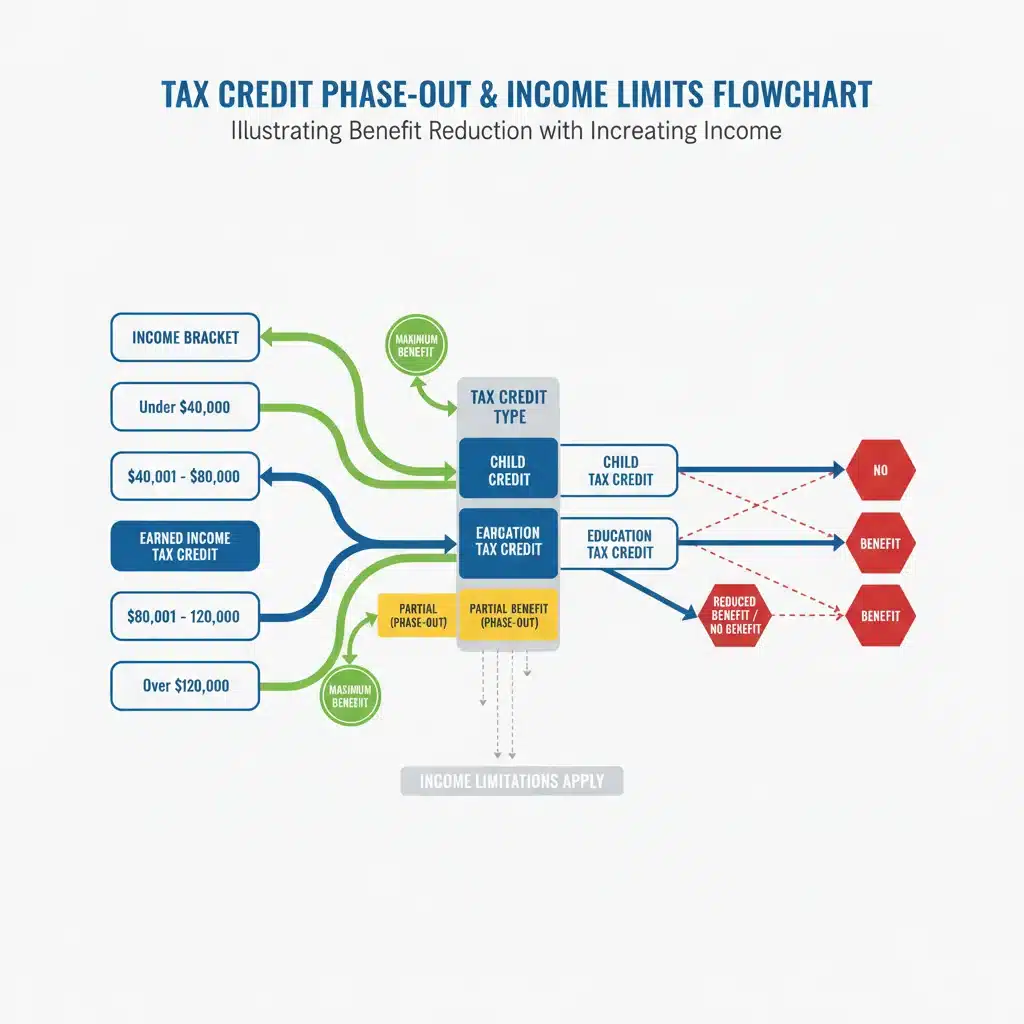
A significant factor in determining the actual amount of Child Tax Credit 2026 a family receives will be their adjusted gross income (AGI). The credit typically begins to phase out once a taxpayer’s AGI exceeds certain thresholds. For the current CTC ($2,000 per child), the phase-out thresholds are $200,000 for single filers and $400,000 for married couples filing jointly.
For every $1,000 (or fraction thereof) by which a taxpayer’s AGI exceeds these thresholds, the credit amount is reduced by $50. This means that higher-income families may receive a reduced credit or no credit at all.
If the Child Tax Credit 2026 reverts to or incorporates elements of the ARPA expansion, the income thresholds for the increased credit amount ($3,600 or $3,000) would likely be much lower. During 2021, the expanded portion of the credit began to phase out at AGIs of $75,000 for single filers, $112,500 for heads of household, and $150,000 for married couples filing jointly. Above these amounts, the expanded credit phased out until it reached the pre-ARPA levels. The remaining $2,000 credit then phased out at the higher $200,000/$400,000 thresholds.
Understanding these potential phase-out rules is crucial for families trying to estimate their future benefits. Even if the maximum credit increases, income limitations could still mean a reduced benefit for many households. It’s advisable to consult with a tax professional or use reliable tax software to accurately project your eligibility based on your specific income and family situation.
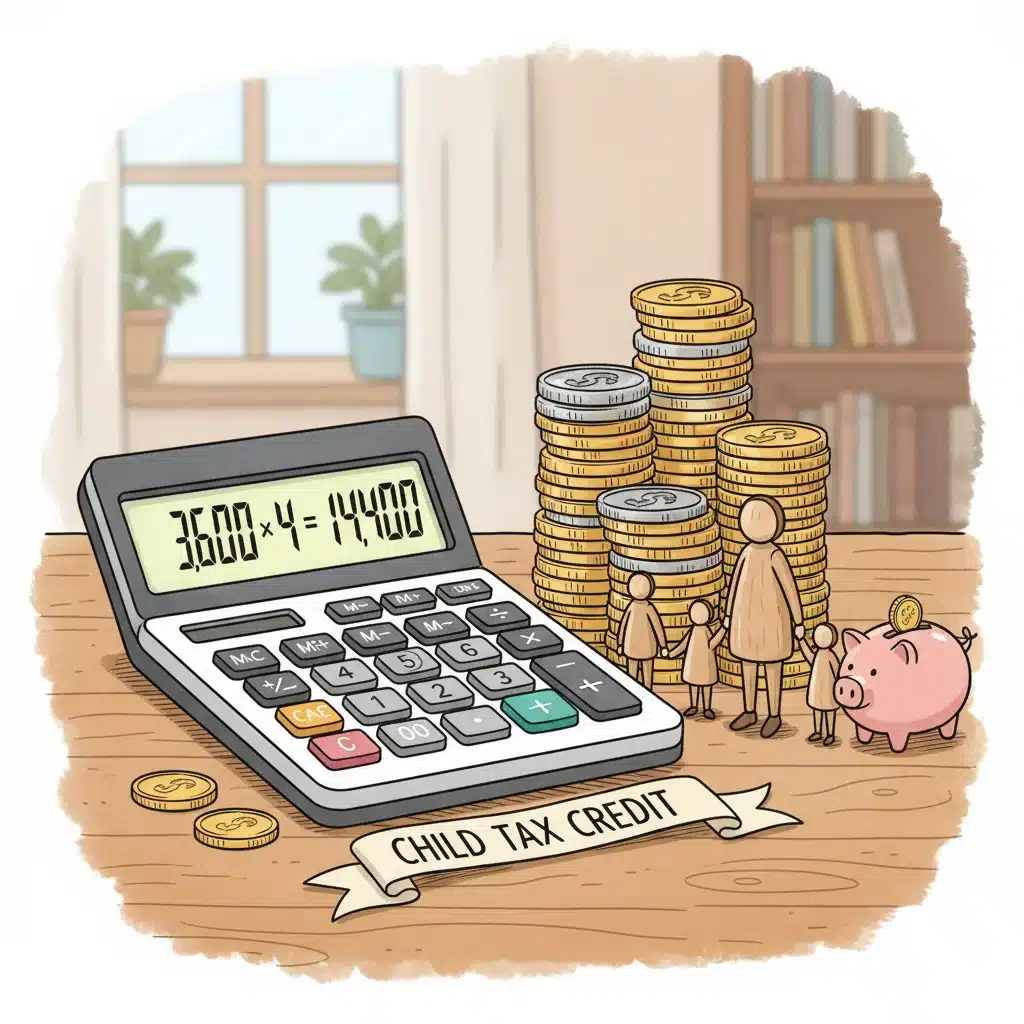
How the Child Tax Credit Impacts Your Family’s Finances
The Child Tax Credit 2026, especially if enhanced, can have a substantial positive impact on a family’s financial well-being. For many, it means the difference between struggling to make ends meet and having a bit more breathing room in the budget. Here are some ways the credit can help:
- Reduced Tax Liability: The most direct impact is a reduction in the amount of federal income tax you owe. A credit is a dollar-for-dollar reduction of your tax bill.
- Increased Tax Refund: If the credit is refundable and exceeds your tax liability, you could receive the difference as a tax refund. This is particularly beneficial for lower-income families who might owe little to no federal income tax.
- Covering Essential Expenses: For many families, the credit helps cover crucial expenses such as food, housing, childcare, healthcare, and educational supplies.
- Stimulating Local Economies: The influx of funds into households often translates to increased spending in local communities, benefiting small businesses and contributing to economic growth.
- Poverty Reduction: As seen with the ARPA expansion, a robust CTC is a powerful tool for combating child poverty, lifting millions of children out of poverty or near-poverty conditions.
Families should consider the Child Tax Credit 2026 as a key component of their annual financial planning. While it’s not guaranteed to be at the expanded levels, being aware of the possibilities allows for better budgeting and anticipation of potential relief.
Preparing for Potential Changes: What Families Can Do Now
While the exact details of the Child Tax Credit 2026 are still subject to legislative decisions, there are proactive steps families can take to prepare for potential changes and ensure they are ready to claim any benefits they are entitled to:
- Stay Informed: Keep an eye on legislative updates from Congress and announcements from the IRS. Reputable financial news outlets and government websites are excellent sources of information.
- Maintain Accurate Records: Ensure all your family’s financial records are organized and up-to-date. This includes birth certificates, Social Security numbers for all dependents, income statements, and any other relevant documentation that would be needed to prove eligibility.
- Understand Current CTC Rules: Familiarize yourself with the current Child Tax Credit rules. This will give you a baseline to understand how any future changes for Child Tax Credit 2026 might affect you.
- Estimate Your Income: Try to project your income for 2026. Since income thresholds are a major factor in eligibility and credit amount, having a good estimate will help you gauge potential benefits.
- Consult a Tax Professional: If you have a complex financial situation or are unsure about your eligibility, consider consulting with a qualified tax advisor. They can provide personalized guidance and help you navigate future tax changes.
- Review Your Withholding: If advance payments are reinstated, you might need to adjust your tax withholding to ensure you’re not over- or under-paying throughout the year.
Being prepared and informed is the best way to leverage any future enhancements to the Child Tax Credit 2026 and optimize your family’s financial outlook.
Debates and Outlook: The Future of the Child Tax Credit
The debate surrounding the Child Tax Credit 2026 is multifaceted, involving economic, social, and political considerations. On one hand, proponents argue for a permanent expansion, citing the proven benefits in reducing child poverty, improving child well-being, and boosting economic stability. They emphasize the importance of supporting families, especially in an era of rising costs of living.
On the other hand, concerns are often raised about the cost of a permanently expanded credit to the federal budget. Critics may also argue about potential impacts on work incentives, although studies on the ARPA expansion generally found minimal negative effects on parental employment. The design of the credit, particularly its refundability and advance payment structure, also remains a point of contention.
As 2026 approaches and the sunset provisions of the TCJA loom, Congress will face pressure to address these expiring tax provisions, including the CTC. The outcome will depend on various factors:
- Political Will: The willingness of both parties to find common ground and prioritize family support.
- Economic Conditions: The state of the economy, inflation, and unemployment rates could influence the perceived need for and affordability of an enhanced credit.
- Fiscal Policy: Broader discussions about federal spending, deficits, and national debt will play a role in shaping the final legislation.
It is reasonable to expect that some form of legislative action regarding the Child Tax Credit 2026 will occur. Whether it will be a full return to the ARPA-era $3,600 benefit or a more modest adjustment remains to be seen. Families should remain cautiously optimistic and continue to monitor developments.
Comparison: Current CTC vs. Potential 2026 CTC Enhancements
To put the potential changes into perspective, let’s briefly compare the current Child Tax Credit rules with the possible enhancements for the Child Tax Credit 2026:
Current CTC (as of 2023/2024 tax years):
- Maximum Credit: Up to $2,000 per qualifying child.
- Refundability: Up to $1,600 of the credit is refundable (indexed for inflation), meaning you can get it back even if you owe no federal income tax.
- Age Limit: Child must be under 17 at the end of the tax year.
- Income Phase-Out: Begins at $200,000 AGI for single filers, $400,000 for married filing jointly.
- Advance Payments: No advance payments; received as a lump sum with tax refund or reduction in tax liability.
Potential CTC for 2026 (if ARPA-like enhancements are passed):
- Maximum Credit: Potentially $3,600 for children under 6 and $3,000 for children aged 6-17.
- Refundability: Fully refundable, allowing all eligible low-income families to receive the entire benefit.
- Age Limit: Likely remains under 17, but some proposals have considered expanding to 17-year-olds for the full credit.
- Income Phase-Out: Could involve lower thresholds for the expanded portion (e.g., $75,000 single, $150,000 married filing jointly) before reverting to higher thresholds for the base credit.
- Advance Payments: Could be reinstated, providing monthly or periodic payments.
This comparison highlights the significant difference an expanded Child Tax Credit 2026 could make, particularly for lower and middle-income families who would benefit most from increased refundability and higher credit amounts. The debate for Child Tax Credit 2026 will undoubtedly focus on these crucial differences.
Conclusion: Navigating the Future of Family Tax Benefits
The journey towards the Child Tax Credit 2026 is filled with anticipation and uncertainty. While the prospect of an increased $3,600 per child benefit offers significant hope for millions of families, the final shape of the legislation will depend on ongoing political negotiations and economic realities. The temporary expansion under the American Rescue Plan Act demonstrated the profound positive impact a generous and fully refundable Child Tax Credit can have on child poverty and family financial stability.
As we move closer to 2026, it is imperative for families to stay informed, maintain meticulous records, and understand the current eligibility criteria and income limitations. Being proactive in your financial planning and seeking professional advice when needed will ensure you are well-prepared to take advantage of any available tax benefits. The Child Tax Credit remains a vital tool in supporting the well-being of children and families across the nation, and its future evolution will undoubtedly be a key focus of federal policy. The ultimate goal remains to provide meaningful financial relief that helps families thrive, and the discussions around the Child Tax Credit 2026 are central to achieving that objective.