Social Security Adjustments 2026: What 65 Million Americans Need to Know Now

The Social Security Administration is preparing for significant adjustments in 2026, impacting cost-of-living allowances, Medicare premiums, and earning limits for over 65 million beneficiaries. Understanding these changes is crucial for informed financial planning.
Are you among the 65 million Americans who rely on Social Security? If so, understanding Social Security 2026 adjustments is not just important, it’s essential for your financial well-being. These upcoming changes could significantly impact your monthly benefits, Medicare costs, and even your eligibility for certain programs.
Understanding the Cost-of-Living Adjustment (COLA) for 2026
The annual Cost-of-Living Adjustment, or COLA, is a critical component of Social Security, designed to ensure that the purchasing power of benefits doesn’t erode due to inflation. For 2026, anticipation is building around what this adjustment will mean for retirees, disabled individuals, and survivors. COLA aims to keep pace with rising costs, reflecting changes in the Consumer Price Index for Urban Wage Earners and Clerical Workers (CPI-W).
While the official COLA announcement typically occurs in October of the preceding year, projections and expert analyses offer valuable insights into what beneficiaries might expect. These forecasts are based on economic indicators and inflation trends throughout the year, providing an early glimpse into potential benefit increases.
How COLA is Calculated
The Social Security Administration (SSA) uses a specific formula to determine the COLA. This involves comparing the average CPI-W for the third quarter of the current year (July, August, and September) with the average for the third quarter of the last year in which a COLA was payable. The percentage increase, if any, determines the COLA.
- CPI-W Data: The primary driver for COLA is the Consumer Price Index for Urban Wage Earners and Clerical Workers.
- Quarterly Averages: Only third-quarter data is used for the calculation, making the months of July, August, and September crucial.
- Inflationary Impact: Higher inflation generally leads to a larger COLA, helping beneficiaries maintain their living standards.
Impact of Economic Forecasts
Economic forecasts play a significant role in shaping expectations for the 2026 COLA. Analysts look at various factors, including energy prices, food costs, and housing inflation, to predict the trajectory of the CPI-W. These predictions, though not official, help beneficiaries and financial planners prepare for the upcoming adjustments.
In conclusion, the 2026 COLA is a vital adjustment that will directly influence the monthly income of millions. Keeping an eye on inflation data and expert predictions is key to understanding the potential boost to your Social Security benefits.
Medicare Premium and Deductible Changes in 2026
Beyond the COLA, another significant area of adjustment for 2026 concerns Medicare premiums and deductibles. Many Social Security beneficiaries have their Medicare Part B premiums deducted directly from their benefit checks, meaning changes here can directly offset any COLA increase. Understanding these adjustments is crucial for managing your healthcare costs effectively.
Each year, the Centers for Medicare & Medicaid Services (CMS) releases updated figures for Part B and Part D premiums, as well as deductibles for various parts of Medicare. These changes are influenced by healthcare spending, legislative updates, and the financial health of the Medicare trust funds.
Projected Part B Premiums
Medicare Part B covers doctor visits, outpatient care, and some preventive services. Premiums for Part B are typically announced late in the year preceding the adjustment. Several factors contribute to these projections:
- Healthcare Utilization: Increased use of medical services can drive up costs and, consequently, premiums.
- Prescription Drug Costs: While Part D covers most drug costs, overall pharmaceutical spending can indirectly affect Part B premiums.
- “Hold Harmless” Provision: This provision often prevents most beneficiaries from seeing a reduction in their net Social Security benefit due to a Part B premium increase, but it has limitations.
Deductibles and Coinsurance
In addition to premiums, beneficiaries should also be aware of potential changes to deductibles and coinsurance amounts for Medicare Parts A and B. These are the out-of-pocket costs you pay before Medicare begins to cover expenses, and they can vary year to year.
For 2026, it’s expected that these amounts will see modest increases, reflecting the rising costs of healthcare. Planning for these potential increases can help you avoid unexpected financial strain. It is always wise to consult the official CMS website or your Medicare provider for the most accurate and up-to-date information.
In summary, Medicare adjustments in 2026 will play a significant role in the overall financial picture for Social Security beneficiaries. Being informed about these changes allows for better budgeting and healthcare planning.
Changes to Social Security’s Earnings Limit for Beneficiaries Under Full Retirement Age
For many Americans who continue to work while receiving Social Security benefits, the earnings limit is a critical consideration. This limit, which typically increases each year, dictates how much you can earn before your benefits are reduced. For 2026, beneficiaries under their full retirement age should pay close attention to these updated thresholds.
The Social Security Administration sets different earnings limits for those who are under full retirement age for the entire year and those who reach full retirement age during the year. These limits are designed to balance the goal of supporting retirees with encouraging continued workforce participation.
How the Earnings Limit Works
If you are under full retirement age and earn more than the annual limit, the SSA will deduct a portion of your benefits. This deduction is temporary; once you reach full retirement age, your benefits are recalculated to account for the withheld amounts. The rules are as follows:
- Under Full Retirement Age: For every $2 you earn above the annual limit, $1 is deducted from your benefits.
- In the Year You Reach Full Retirement Age: For every $3 you earn above a different, higher limit, $1 is deducted. This only applies to earnings before the month you reach full retirement age.
- At or Above Full Retirement Age: There is no earnings limit once you reach your full retirement age. You can earn as much as you want without your benefits being reduced.
Projected Earnings Limit for 2026
The earnings limit is indexed to the national average wage index. As wages generally increase over time, so too does the earnings limit. For 2026, it is anticipated that both the lower and higher earnings limits will see an increase, providing more flexibility for working beneficiaries.
It’s vital for those planning to work and claim benefits to monitor these updated limits. Exceeding the limit without proper planning can lead to unexpected reductions in your monthly Social Security payments. Always consult the official SSA website for the most accurate and current figures to ensure compliance and optimize your benefits.
In conclusion, the earnings limit adjustments for 2026 will be a key factor for working beneficiaries. Understanding these thresholds is essential for maximizing your Social Security income while continuing to work.
Maximum Taxable Earnings and Future Solvency
Another significant adjustment that impacts both current workers and the long-term solvency of Social Security is the maximum amount of earnings subject to Social Security taxes. This figure, often called the ‘taxable maximum,’ typically increases annually, reflecting changes in national wage levels. For 2026, this adjustment will have implications for higher earners and the program’s overall financial health.
The taxable maximum ensures that a portion of higher earners’ income contributes to the Social Security trust funds. This mechanism is crucial for funding current benefits and maintaining the program’s ability to pay out benefits in the future.
How the Taxable Maximum Works
Social Security taxes (FICA taxes) are levied on an individual’s earnings up to a certain limit each year. Earnings above this limit are not subject to Social Security taxes. The taxable maximum is adjusted based on the national average wage index.
- Tax Contribution: Both employees and employers contribute a percentage of earnings up to the taxable maximum.
- Benefit Calculation: Only earnings up to the taxable maximum are considered when calculating future Social Security benefits.
- Annual Adjustment: The limit is designed to keep pace with wage growth, ensuring the program’s revenue stream remains robust.
Solvency Concerns and Adjustments
The long-term solvency of Social Security is a perennial topic of discussion, and adjustments to the taxable maximum are one of the levers the system uses to maintain its financial stability. While these adjustments help, broader demographic and economic trends continue to pose challenges to the program’s future.
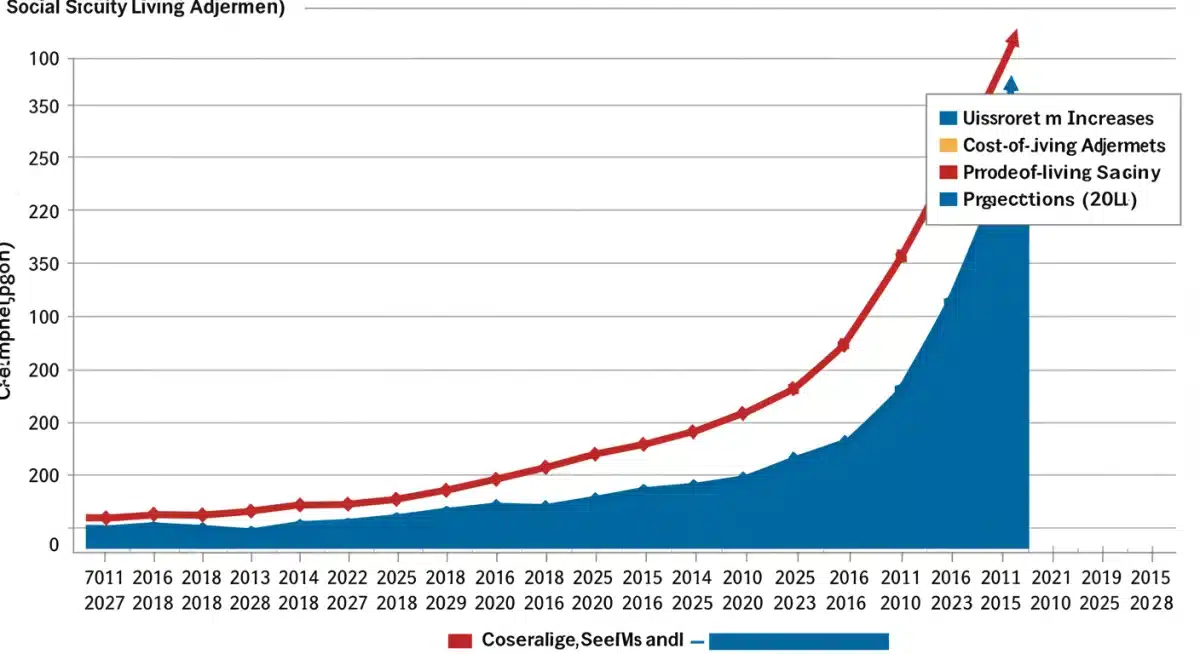
Experts and policymakers continually explore various options to strengthen Social Security’s finances, including potential reforms to the taxable maximum, changes to the retirement age, and adjustments to benefit formulas. For 2026, the increase in the taxable maximum is a standard, but important, part of this ongoing effort.
In conclusion, the maximum taxable earnings adjustment for 2026 is a key element affecting both individual tax contributions and the broader financial outlook for Social Security. Understanding this mechanism is vital for appreciating the program’s funding structure.
Understanding the Importance of Full Retirement Age (FRA) in 2026
The concept of Full Retirement Age (FRA) is fundamental to Social Security benefits, determining when you can receive 100% of your primary insurance amount. For those approaching retirement in 2026 and beyond, understanding your specific FRA is more crucial than ever, as it directly impacts your benefit amount and the implications of claiming early or delaying benefits.
FRA is not a static number; it depends on your birth year. For anyone born in 1960 or later, the FRA is 67. This staggered increase from age 65 to 67 was implemented to help address the long-term financial challenges facing the Social Security system, reflecting increased life expectancies.
Claiming Benefits Early vs. Delaying
Your FRA significantly influences your claiming strategy. While you can start receiving benefits as early as age 62, doing so results in a permanent reduction of your monthly payment. Conversely, delaying benefits past your FRA, up to age 70, can lead to increased monthly payments through delayed retirement credits.
- Early Claiming (Age 62): Benefits are reduced by approximately 25-30% compared to your FRA benefit.
- Full Retirement Age (FRA): You receive 100% of your calculated basic benefit amount.
- Delayed Claiming (Up to Age 70): Benefits increase by a certain percentage each year you delay past your FRA, up to a maximum of 32% (for those with an FRA of 67).
Planning for Your FRA in 2026
For those nearing retirement in 2026, knowing your FRA and understanding the financial implications of different claiming ages is paramount. This decision should be integrated into your broader financial planning, considering factors like your health, other income sources, and spouse’s benefits.
The SSA provides tools and resources to help you determine your FRA and estimate your potential benefits at different claiming ages. Utilizing these resources can empower you to make an informed decision that best suits your individual circumstances and financial goals for 2026 and beyond.
In essence, the Full Retirement Age remains a cornerstone of Social Security planning. Its understanding is vital for maximizing your benefits and securing your financial future in 2026.
Implications for Future Social Security Reform in 2026
While the 2026 adjustments discussed so far are routine, the broader conversation around Social Security’s long-term solvency often includes potential reforms. These discussions are ongoing and could shape the program’s future, impacting younger generations and those planning for retirement beyond 2026. Understanding these potential reforms is crucial for a complete picture of Social Security.
The Social Security Trust Funds are projected to be able to pay 100% of scheduled benefits until the mid-2030s, after which they would only be able to pay about 80% if no legislative action is taken. This projection fuels the debate on how to ensure the program’s sustainability for decades to come.
Commonly Discussed Reform Options
Several proposals are frequently put forward to address Social Security’s financial challenges. These range from adjustments to taxes to modifications of benefits:
- Raising the Full Retirement Age: Gradually increasing the age at which full benefits are received.
- Increasing the Taxable Maximum: Applying Social Security taxes to a higher amount of earnings, or eliminating the cap entirely.
- Adjusting the COLA Formula: Modifying how the Cost-of-Living Adjustment is calculated, potentially using a different inflation index.
- Means-Testing Benefits: Reducing benefits for higher-income retirees.
Political Landscape and Public Debate
The political landscape plays a significant role in the feasibility of any Social Security reform. Changes to the program are often highly contentious, given its importance to millions of Americans. Public opinion, advocacy groups, and electoral cycles all influence the progress of reform efforts.
As 2026 approaches, and with it, closer proximity to the projected trust fund depletion date, discussions around these reforms are likely to intensify. Beneficiaries and future retirees should stay informed about these debates, as they could ultimately lead to significant changes in how Social Security operates.
In conclusion, while 2026 brings specific annual adjustments, it also stands as a point in time where the broader conversation about Social Security reform will continue to evolve. Staying aware of these discussions is key to understanding the program’s future trajectory.
Actionable Steps for Americans in Light of 2026 Adjustments
Given the various Social Security adjustments anticipated for 2026, proactive planning is essential for the 65 million Americans who depend on these benefits. Taking actionable steps now can help you navigate these changes effectively and secure your financial future. It’s not just about reacting to adjustments but strategically preparing for them.
Financial literacy and engagement with your Social Security benefits are more important than ever. Understanding how COLA, Medicare premiums, and earnings limits interact with your personal financial situation allows for better decision-making.
Review Your Social Security Statement
One of the most fundamental steps you can take is to regularly review your Social Security statement. This document provides a personalized estimate of your future benefits based on your earnings history. It’s available online through your my Social Security account.
- Verify Earnings History: Ensure your earnings record is accurate, as this directly impacts your benefit calculations.
- Estimate Benefits: Use the estimators to see how benefits change based on different claiming ages.
- Check for Errors: Report any discrepancies or missing earnings to the SSA promptly.
Consult a Financial Advisor
For many, the complexities of Social Security, combined with other retirement savings and investments, warrant professional guidance. A financial advisor specializing in retirement planning can help you integrate Social Security into your overall financial strategy.
They can provide personalized advice on claiming strategies, managing Medicare costs, and understanding the implications of working while receiving benefits. Their expertise can be invaluable in making informed decisions for 2026 and beyond.
In conclusion, proactive engagement and informed decision-making are paramount when facing the Social Security adjustments of 2026. By reviewing your statement and seeking professional advice, you can ensure your financial plans are robust and resilient.
| Key Adjustment Area | What to Expect for 2026 |
|---|---|
| COLA (Cost-of-Living Adjustment) | Anticipated increase to maintain purchasing power against inflation, based on CPI-W. |
| Medicare Part B Premiums | Expected increases influenced by healthcare costs, potentially offsetting COLA gains. |
| Earnings Limit (Under FRA) | Higher thresholds allowing beneficiaries to earn more before benefits are reduced. |
| Maximum Taxable Earnings | Increase in the income amount subject to Social Security taxes, impacting higher earners. |
Frequently Asked Questions About 2026 Social Security Adjustments
The primary purpose of the Social Security Cost-of-Living Adjustment (COLA) is to protect the purchasing power of benefits from inflation. It ensures that the value of your Social Security payments keeps pace with rising costs of goods and services, helping beneficiaries maintain their standard of living.
For most beneficiaries, Medicare Part B premiums are deducted directly from their Social Security checks. An increase in Part B premiums can reduce the net amount you receive, potentially offsetting some or all of a COLA increase. It’s crucial to factor these deductions into your budget.
Yes, but there are earnings limits if you are under your Full Retirement Age (FRA). If you earn above the annual limit, your benefits will be temporarily reduced. Once you reach FRA, there are no earnings limits, and you can work as much as you want without benefit reductions.
The ‘taxable maximum’ is the amount of earnings subject to Social Security taxes each year. It’s adjusted annually based on the national average wage index to ensure the program’s funding keeps pace with economic growth, contributing to its long-term solvency.
You can find your personalized Social Security benefit estimates by creating or logging into your ‘my Social Security’ account on the official Social Security Administration (SSA) website. This account allows you to review your earnings history and access benefit calculators.
Conclusion
The upcoming Social Security 2026 adjustments represent significant financial considerations for over 65 million Americans. From the eagerly anticipated Cost-of-Living Adjustment (COLA) to changes in Medicare premiums, earnings limits, and the taxable maximum, each adjustment plays a vital role in the financial landscape of beneficiaries and workers alike. Staying informed about these changes, actively reviewing your Social Security statement, and seeking professional financial advice are crucial steps. By understanding and preparing for these adjustments, you can ensure your financial planning remains robust and resilient, safeguarding your future well-being against the evolving dynamics of Social Security.