Vocational Training 2026: High-Demand Careers Over $50K

In 2026, vocational training offers direct pathways to high-demand careers with average starting salaries exceeding $50,000, particularly in sectors like renewable energy, cybersecurity, and advanced manufacturing, providing a practical alternative to traditional four-year degrees.
Are you considering your future career path and looking for options that offer both stability and strong earning potential without the traditional four-year university route? In 2026, vocational training in 2026 stands out as a powerful gateway to high-demand jobs, especially those boasting average starting salaries over $50,000.
The evolving landscape of vocational training in 2026
The job market is constantly shifting, and 2026 is no exception. Traditional career paths are being redefined, and new opportunities are emerging at an accelerated pace. Vocational training, once seen as a secondary option, has now become a primary driver for skilled labor in crucial industries.
This evolution is fueled by several factors. Rapid technological advancements demand specialized skills that often aren’t covered in broad academic programs. Industries like renewable energy, cybersecurity, and advanced manufacturing are experiencing booming growth, creating a significant demand for workers with practical, hands-on expertise. Vocational programs are uniquely positioned to meet this need, offering focused curricula that directly translate to workplace readiness.
Why vocational training is gaining traction
- Faster entry into the workforce: Vocational programs are typically shorter than bachelor’s degrees, allowing graduates to start earning sooner.
- Lower educational debt: The cost of vocational training is often significantly less than a four-year university, reducing the financial burden on students.
- Direct skill acquisition: Curricula are designed to teach specific, in-demand skills, making graduates highly attractive to employers.
- Strong industry connections: Many programs collaborate directly with local businesses, providing internship opportunities and job placement assistance.
As we look towards 2026, the emphasis on practical skills continues to grow. Employers are increasingly valuing certifications and demonstrable abilities over general degrees, particularly for roles that require immediate, hands-on contribution. This shift makes vocational training an increasingly smart and strategic choice for those seeking a rewarding career with excellent financial prospects.
Career path 1: renewable energy technician
The global push towards sustainable energy sources has made the renewable energy sector one of the fastest-growing industries. By 2026, the demand for skilled technicians to install, maintain, and repair renewable energy systems is skyrocketing, offering robust career opportunities with competitive salaries.
These technicians are critical to the infrastructure of a greener future. They work with diverse technologies, from solar panels on residential rooftops to massive wind turbines in offshore farms. Their expertise ensures that these complex systems operate efficiently and reliably, contributing directly to energy independence and environmental protection. Their work is not just a job; it’s a vital contribution to a sustainable planet.
What does a renewable energy technician do?
- Solar panel installation and maintenance: Installing photovoltaic (PV) systems on various structures and performing routine checks and repairs.
- Wind turbine technology: Assembling, inspecting, and troubleshooting mechanical and electrical components of wind turbines.
- Energy storage systems: Working with battery storage solutions and grid integration.
- System diagnostics: Using specialized tools to identify and resolve issues within renewable energy setups.
Vocational programs in renewable energy typically cover electrical theory, safety protocols, specific technology applications, and practical field experience. Graduates are equipped with the knowledge to handle the intricate components of modern energy systems, ensuring their long-term functionality. The hands-on nature of the training prepares individuals for immediate employment, making them valuable assets to energy companies.
The average starting salary for a renewable energy technician in 2026 is projected to be well over $50,000, with experienced professionals earning significantly more. This career path not only offers financial stability but also the satisfaction of contributing to a crucial global effort. The demand is steady, and the work is often dynamic, involving both fieldwork and technical analysis. This makes it an exciting and fulfilling choice for those interested in technology and environmental sustainability.
Career path 2: cybersecurity specialist
In an increasingly digital world, cybersecurity is no longer a niche concern but a fundamental necessity for businesses and individuals alike. The rise in cyber threats means that dedicated cybersecurity specialists are in exceptionally high demand, making this one of the most lucrative vocational training paths for 2026.
These professionals are the guardians of digital information, protecting sensitive data from breaches, attacks, and theft. Their expertise is vital across all sectors, from finance and healthcare to government and e-commerce. A single cyberattack can have devastating consequences, both financially and reputationally, underscoring the critical role cybersecurity specialists play in maintaining trust and operational continuity.
Key responsibilities of a cybersecurity specialist
- Network security monitoring: Continuously watching for suspicious activity and potential vulnerabilities.
- Incident response: Acting quickly to contain and mitigate cyberattacks, minimizing damage.
- Security system implementation: Designing, installing, and configuring firewalls, intrusion detection systems, and other security measures.
- Risk assessment: Identifying potential security weaknesses and recommending preventative strategies.
Vocational programs in cybersecurity focus on practical skills such as ethical hacking, network defense, digital forensics, and compliance. Students learn to use industry-standard tools and techniques to identify, prevent, and respond to cyber threats. The curriculum is often updated to reflect the latest attack vectors and defense mechanisms, ensuring graduates are always at the forefront of digital protection.
Starting salaries for cybersecurity specialists in 2026 are frequently reported to be well above $55,000, with significant growth potential as they gain experience and specialized certifications. The field offers diverse roles, from security analysts to penetration testers, allowing for career progression and continuous learning. For individuals with a keen eye for detail, problem-solving abilities, and an interest in technology, cybersecurity presents an intellectually stimulating and financially rewarding career.
Career path 3: advanced manufacturing technician
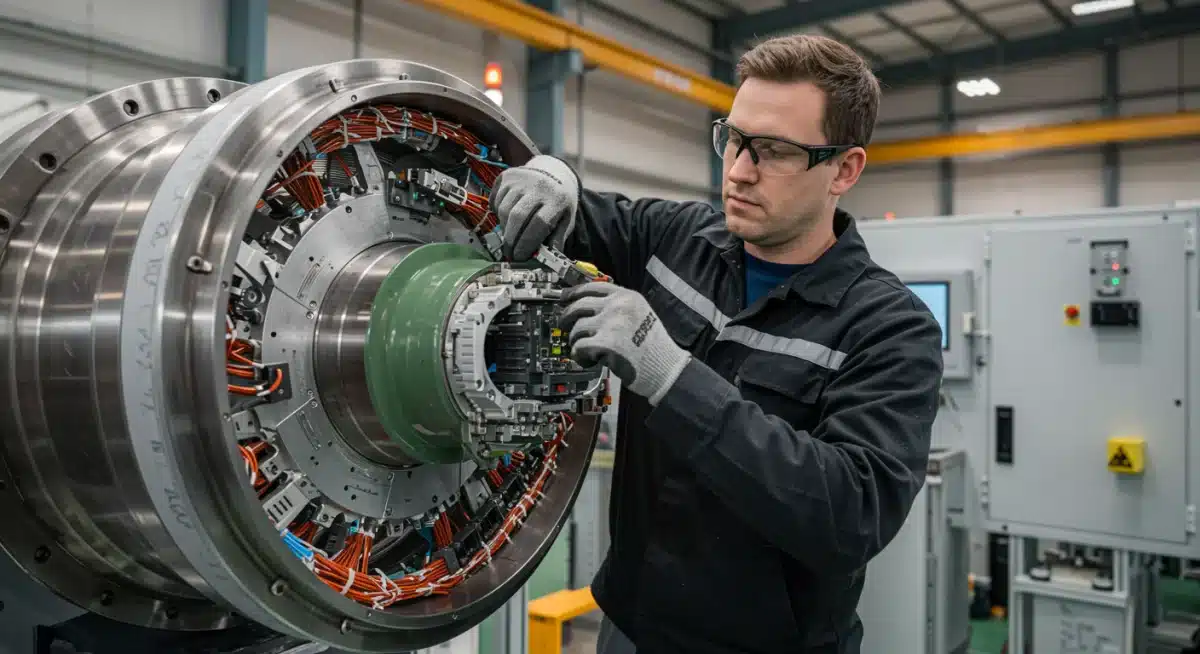
Advanced manufacturing is revolutionizing how products are designed, produced, and distributed. This sector integrates cutting-edge technologies like robotics, automation, and artificial intelligence into the manufacturing process, creating a need for highly skilled technicians who can operate and maintain these complex systems. This vocational path is robust and growing for 2026.
These technicians are the backbone of modern production lines, ensuring efficiency, precision, and innovation. They work in environments that are far removed from traditional factory settings, often collaborating with engineers and designers to optimize processes and develop new products. Their skills are essential for industries ranging from aerospace and automotive to medical devices and consumer electronics, making them indispensable in today’s economy.
Roles within advanced manufacturing
- Robotics technician: Programming, troubleshooting, and maintaining industrial robots.
- CNC machine operator/programmer: Setting up and operating computer numerical control machines for precision parts manufacturing.
- Automation specialist: Implementing and managing automated systems and control processes.
- Quality control technician: Ensuring products meet rigorous standards using advanced inspection equipment.
Vocational training in advanced manufacturing typically includes instruction in computer-aided design (CAD), computer-aided manufacturing (CAM), mechatronics, industrial controls, and quality assurance. These programs often feature state-of-the-art labs where students get hands-on experience with the same equipment used in modern factories. This immersive training ensures graduates are well-prepared for the demands of the industry.
The average starting salary for an advanced manufacturing technician in 2026 is expected to comfortably exceed $50,000, with opportunities for advancement into supervisory or specialized engineering support roles. The field offers a blend of mechanical aptitude and digital proficiency, appealing to those who enjoy working with sophisticated machinery and innovative production techniques. As manufacturing continues to evolve, the demand for these skilled professionals will only intensify, promising a stable and prosperous career.
Comparing vocational training to traditional degrees
Choosing between vocational training and a traditional four-year degree is a significant decision, and each path offers distinct advantages. While universities provide a broad academic foundation and theoretical knowledge, vocational programs excel in delivering specialized, practical skills tailored to immediate job market needs. In 2026, the value proposition of vocational training is particularly strong for certain career aspirations.
Vocational schools often boast smaller class sizes, leading to more personalized instruction and hands-on learning experiences. This direct engagement with tools and technologies accelerates skill acquisition and builds confidence. Furthermore, the curriculum is frequently developed in collaboration with industry partners, ensuring that the skills taught are directly relevant to employer demands. This close alignment helps bridge the gap between education and employment, a challenge often faced by graduates of more general academic programs.
Key differences and benefits
- Focus: Vocational training is career-specific; traditional degrees are broader and academic.
- Duration: Vocational programs are typically shorter (months to two years) compared to four-year degrees.
- Cost: Generally, vocational training is more affordable, leading to less student debt.
- Employment readiness: Graduates are often job-ready immediately upon completion due to practical training.
- Earning potential: Many vocational careers, especially those highlighted, offer comparable or even higher starting salaries than some bachelor’s degree fields.
While a bachelor’s degree can open doors to various professional fields and often serves as a prerequisite for higher-level management or research roles, vocational training provides a direct and efficient route to skilled trades and technical professions. For individuals who prefer hands-on work, want to enter the workforce quickly, and aim for a solid income without extensive debt, vocational training in 2026 represents an incredibly viable and often superior option. The choice ultimately depends on individual career goals, learning style, and financial considerations.
Finding the right vocational program for you
With the growing number of vocational opportunities, selecting the right program is a crucial step towards a successful career. Research and due diligence are essential to ensure that the training you receive aligns with your aspirations and the demands of the job market in 2026. Not all programs are created equal, and understanding what to look for can make a significant difference in your future prospects.
Start by identifying your interests and aptitudes. Are you drawn to technology, hands-on construction, or problem-solving? Once you have a general idea, explore specific industries that align with those interests. Then, delve into programs that offer comprehensive training in those areas. Look for institutions with strong reputations, experienced instructors, and up-to-date facilities. The quality of your training directly impacts your employability and long-term career growth.
Factors to consider when choosing a program
- Accreditation: Ensure the school and program are accredited by a recognized agency, which validates the quality of education and allows for financial aid eligibility.
- Curriculum relevance: Check if the program content is current and teaches skills directly applicable to the 2026 job market.
- Hands-on experience: Prioritize programs that offer extensive practical training, internships, or apprenticeships.
- Job placement rates: Inquire about graduate employment statistics and career services support.
- Instructor expertise: Look for instructors with real-world industry experience.
- Cost and financial aid: Understand tuition fees and available scholarships or grants.
Visiting campuses, speaking with current students and alumni, and interviewing program directors can provide valuable insights. Additionally, networking with professionals in your desired field can offer perspectives on which skills and certifications are most valued. By carefully evaluating these factors, you can confidently choose a vocational program that sets you up for a high-demand, high-paying career in 2026 and beyond. Making an informed decision now will pay dividends for years to come.
Future outlook and career growth in these fields
The vocational career paths discussed—renewable energy technician, cybersecurity specialist, and advanced manufacturing technician—are not just high-demand now; they are poised for substantial growth and evolution well beyond 2026. These fields are at the forefront of technological innovation and societal needs, ensuring long-term stability and continuous opportunities for advancement.
For instance, the renewable energy sector continues to expand globally, driven by environmental mandates and technological breakthroughs. This means a constant need for technicians who can adapt to new energy sources and more efficient systems. Similarly, cybersecurity threats are becoming more sophisticated, necessitating a perpetual arms race in digital defense, which guarantees sustained demand for skilled specialists. Advanced manufacturing, with its integration of AI and automation, will only become more complex, requiring technicians with increasingly specialized and adaptive skill sets.
Opportunities for advancement and specialization
- Renewable energy: Specialization in specific technologies (e.g., geothermal, hydro), project management, or energy consulting.
- Cybersecurity: Roles in security architecture, forensic analysis, compliance management, or becoming a Chief Information Security Officer (CISO).
- Advanced manufacturing: Moving into robotics engineering, process optimization, industrial design, or supervisory positions.
Continuous learning and professional development are key in these dynamic fields. Certifications, advanced workshops, and even pursuing further education can open doors to higher-paying roles and leadership opportunities. Employers in these sectors often support ongoing training, recognizing the value of a workforce that keeps pace with technological change. The future is bright for those who embark on these vocational paths, offering not just a job but a fulfilling and evolving career with significant impact.
| Career Path | Description & Salary Expectation |
|---|---|
| Renewable Energy Technician | Installs and maintains solar panels and wind turbines. Starting salaries over $50,000. |
| Cybersecurity Specialist | Protects digital data and systems from cyber threats. Starting salaries typically over $55,000. |
| Advanced Manufacturing Technician | Operates and maintains robotics and automation in production. Starting salaries often exceed $50,000. |
| Vocational Training Benefits | Faster entry to workforce, lower debt, practical skills, high demand. |
Frequently asked questions about vocational training in 2026
Vocational training focuses on practical skills for specific trades, typically completed in months to two years. A traditional degree offers broader academic knowledge over four years or more. Vocational programs prepare you for immediate employment in specialized fields, often with less debt and faster entry into the workforce.
Absolutely. Sectors like renewable energy, cybersecurity, and advanced manufacturing are experiencing significant growth and a critical shortage of skilled workers. These roles often command starting salaries well above $50,000 due to their specialized nature and the high demand for their expertise in today’s economy.
The duration of vocational training programs varies but is generally much shorter than a bachelor’s degree. Many programs can be completed within a few months, while others, particularly those leading to an associate degree, might take up to two years. This allows for quicker entry into the job market.
Cybersecurity vocational programs typically teach essential skills such as network defense, ethical hacking, digital forensics, incident response, and security system implementation. You’ll learn to identify vulnerabilities, protect data, and respond to cyber threats using industry-standard tools and practices, preparing you for critical roles in digital protection.
Yes, vocational training is an excellent option for career changers. Its focused, practical approach allows individuals to quickly acquire new, in-demand skills without the extensive time and financial commitment of a traditional degree. It provides a direct pathway to new industries, making it ideal for those looking for a fresh start.
Conclusion
As we navigate the evolving economic landscape of 2026, vocational training has firmly established itself as a powerful and practical alternative to traditional higher education, especially for those seeking high-demand careers with robust earning potential. The paths of renewable energy technician, cybersecurity specialist, and advanced manufacturing technician exemplify how specialized skills can lead directly to fulfilling and well-compensated roles. These fields not only offer competitive starting salaries over $50,000 but also promise significant growth and continuous opportunities for professional development. Embracing vocational education means investing in a future where practical expertise is paramount, leading to quicker employment, reduced debt, and a meaningful contribution to critical industries.