Economic Outlook 2026: Household Income Boost & Fiscal Policy Impact

Anúncios
Economic Outlook: Analysts Predict a 4% Rise in National Household Income by End of 2026 Due to New Fiscal Policies
Unpacking the factors driving a significant boost in household income growth and what it means for the nation.
Anúncios
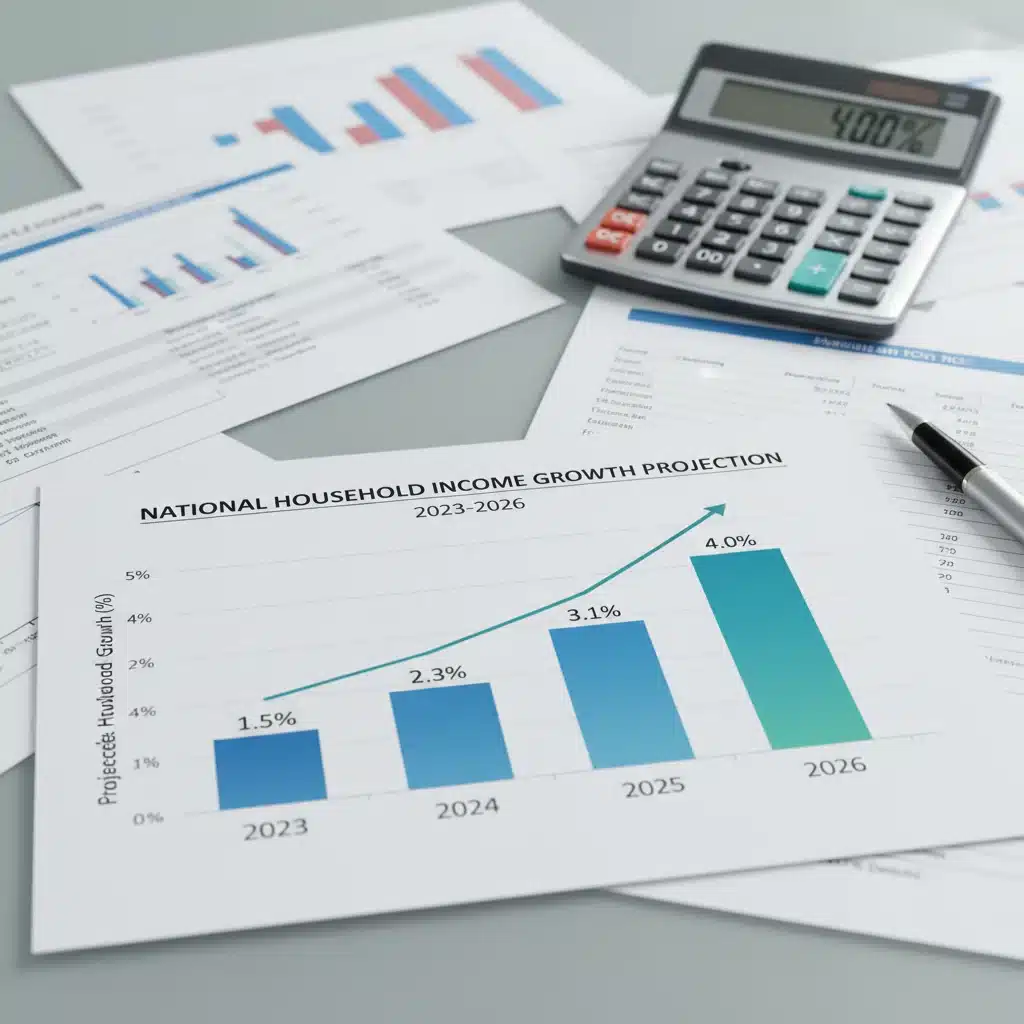
The economic landscape is constantly evolving, a complex tapestry woven from countless threads of policy decisions, market fluctuations, and global events. As we look towards the horizon of 2026, a significant and optimistic forecast is emerging from leading economic analysts: a projected 4% rise in national household income growth. This isn’t merely a hopeful wish; it’s a data-driven prediction largely attributed to the strategic implementation of new fiscal policies. For millions of households across the nation, this forecast represents more than just numbers on a spreadsheet; it signifies enhanced purchasing power, improved financial stability, and a potential uplift in living standards. Understanding the intricate mechanisms behind this anticipated growth is crucial for individuals, businesses, and policymakers alike. This comprehensive analysis will delve into the specifics of these fiscal policies, explore the various economic indicators supporting this optimistic outlook, and discuss the potential impacts on different sectors of the economy and, most importantly, on everyday households.
The journey to such a significant increase in household income growth is rarely linear or simple. It involves a delicate balance of government spending, taxation, and regulatory frameworks designed to stimulate economic activity. The new fiscal policies in question are multifaceted, aiming to address several key areas that directly influence income levels. These include, but are not limited to, targeted tax reforms, increased public investments in infrastructure and technology, and initiatives designed to boost employment and wage growth. Each of these components plays a vital role in creating an environment conducive to robust economic expansion and, consequently, higher incomes for the average household. As we navigate the complexities of this forecast, it becomes clear that a holistic understanding is essential to grasp the full implications of this projected economic shift.
The Drivers of Projected Household Income Growth: New Fiscal Policies Unveiled
At the heart of this optimistic prediction for household income growth lies a series of carefully crafted new fiscal policies. These policies are not arbitrary; they are the result of extensive economic modeling and a strategic response to both historical trends and anticipated future challenges. Let’s break down the primary fiscal drivers:
Anúncios
1. Targeted Tax Reforms and Credits
One of the most immediate ways governments can influence disposable income is through tax policy. The new fiscal policies include targeted tax reforms designed to reduce the tax burden on middle- and lower-income households. This could manifest as expanded tax credits for families, deductions for essential expenses, or adjustments to income tax brackets. By allowing individuals to retain more of their earnings, these reforms directly contribute to an increase in net household income growth. Furthermore, some reforms might incentivize businesses to increase wages or invest in employee training, indirectly boosting incomes. The cumulative effect of these tax adjustments is expected to put more money directly into the pockets of consumers, stimulating demand and fostering broader economic activity.
2. Increased Public Investment in Infrastructure and Technology
Long-term economic prosperity and household income growth are often linked to a nation’s infrastructure and technological capabilities. The new fiscal policies allocate significant funds towards public investments in critical areas such as transportation networks, renewable energy projects, and advanced digital infrastructure. These investments create immediate job opportunities in construction, engineering, and related sectors, leading to higher employment rates and increased wages. More importantly, improved infrastructure enhances productivity across all industries, reducing operational costs for businesses and making the economy more competitive. The ripple effect of these efficiencies can translate into higher profits, which can then be reinvested into employee compensation, further fueling household income growth.
3. Workforce Development and Wage Growth Initiatives
Recognizing that a skilled workforce is the backbone of a thriving economy, the new fiscal policies also prioritize initiatives aimed at workforce development. This includes funding for vocational training programs, apprenticeships, and higher education subsidies, all designed to equip workers with the skills demanded by emerging industries. By improving the quality and relevance of the labor force, these initiatives aim to address skill gaps, reduce unemployment, and empower workers to command higher wages. Furthermore, policies that support collective bargaining or establish minimum wage increases in line with productivity gains could also play a role in directly boosting household income growth, especially for those at the lower end of the income spectrum. The focus here is on creating a more equitable and productive labor market where individuals are compensated fairly for their contributions.
4. Support for Small and Medium-Sized Enterprises (SMEs)
SMEs are often the engine of local economies and significant employers. The new fiscal policies are expected to include measures that support the growth and stability of these businesses, such as access to affordable credit, reduced regulatory burdens, and incentives for job creation. When SMEs thrive, they are more likely to expand their workforce and offer competitive wages, directly contributing to household income growth within their communities. This localized economic stimulus is vital for ensuring that the benefits of national economic growth are broadly distributed.
The synergy between these various fiscal measures is what makes the 4% projected rise in household income growth by 2026 a plausible and exciting prospect. It’s a comprehensive approach that tackles income generation from multiple angles, aiming to create a robust and resilient economic environment.
Economic Indicators and Analyst Consensus Supporting the 4% Rise
The prediction of a 4% increase in household income growth is not based on speculation but on rigorous analysis of current economic indicators and a general consensus among leading financial institutions and economic think tanks. Several key indicators are signaling a positive trajectory:
1. Robust Job Market and Decreasing Unemployment
A strong labor market is perhaps the most direct precursor to household income growth. Current trends show a resilient job market with steadily decreasing unemployment rates. As more people are employed, the overall income pool expands. Furthermore, a tight labor market often leads to increased competition for skilled workers, pushing wages upward. This upward pressure on wages is a crucial component of the projected 4% rise.
2. Inflationary Pressures Moderating
While inflation has been a concern, recent data suggests a moderation of inflationary pressures. This is vital for real household income growth. When inflation outpaces wage growth, purchasing power diminishes, even if nominal incomes rise. With inflation stabilizing, the projected 4% increase in nominal income is more likely to translate into tangible gains for households, allowing them to afford more goods and services.
3. Strong Consumer Confidence
Consumer confidence is a powerful indicator of future economic activity. When consumers feel secure about their financial future and the broader economy, they are more likely to spend, which in turn fuels demand and economic expansion. Recent surveys indicate a steady improvement in consumer sentiment, suggesting a willingness to engage in economic activity that will support continued household income growth.
4. Business Investment and Productivity Gains
Businesses are showing increased willingness to invest in capital expenditures and technological upgrades. These investments often lead to productivity gains, meaning workers can produce more efficiently. Higher productivity can justify higher wages without necessarily increasing the cost of goods, thus contributing positively to household income growth. The fiscal policies encouraging innovation and investment are playing a direct role in this trend.
5. Global Economic Stability
While domestic policies are crucial, global economic stability also plays a role. A stable global environment reduces uncertainties, encourages international trade, and can lead to increased foreign investment. These factors can indirectly support domestic economic expansion and, by extension, household income growth. The current international outlook, while not without challenges, is generally more stable than in recent years.
The convergence of these positive indicators provides a strong foundation for the analysts’ predictions. The consensus among economic experts is that the new fiscal policies, combined with these favorable economic trends, are creating a potent environment for substantial household income growth by the end of 2026.
Potential Impact on Households and the Broader Economy
A 4% rise in national household income growth is not just an abstract economic statistic; it has tangible and far-reaching implications for individuals, families, and the entire economic ecosystem. Understanding these potential impacts is key to preparing for and maximizing the benefits of this economic shift.
For Individual Households:
- Increased Purchasing Power: The most immediate benefit is an increase in disposable income. This means households will have more money to spend on goods and services, improving their quality of life.
- Improved Savings and Investments: With higher incomes, individuals will have greater capacity to save for retirement, emergencies, or large purchases like a home. Increased savings can also fuel investment, contributing to long-term wealth creation.
- Reduced Debt Burden: Higher incomes can help households pay down existing debts faster, reducing financial stress and improving credit scores.
- Enhanced Financial Security: A stronger income base provides a greater sense of financial security, allowing families to weather unexpected expenses or economic downturns more effectively.
- Access to Better Opportunities: Increased financial flexibility can open doors to better educational opportunities, healthcare, and lifestyle choices.
For the Broader Economy:
- Stimulated Consumer Spending: As households have more money, consumer spending is expected to rise. This demand-side stimulus is crucial for businesses, leading to increased production, profits, and further job creation.
- Business Expansion and Investment: With higher consumer demand and potentially lower operating costs due to improved infrastructure, businesses are likely to expand, invest in new technologies, and hire more workers. This creates a virtuous cycle of growth.
- Increased Tax Revenues: Higher incomes and increased economic activity will naturally lead to higher tax revenues for the government. This can fund further public services, reduce national debt, or allow for future tax cuts.
- Reduced Poverty and Inequality: While not a complete solution, a general rise in household income growth, especially if driven by broad-based policies, can contribute to reducing poverty rates and narrowing income inequality.
- Greater Economic Resilience: A financially stronger populace and a robust economy are better equipped to withstand future economic shocks and maintain stability.
While the outlook is overwhelmingly positive, it’s also important to consider potential challenges. These could include managing any residual inflationary pressures, ensuring equitable distribution of income gains, and adapting to potential shifts in labor market demands. However, the overarching sentiment among analysts is that the benefits of this projected household income growth will significantly outweigh these challenges, ushering in a period of substantial economic improvement.

Navigating the New Economic Landscape: Strategies for Households and Businesses
With a projected 4% rise in national household income growth by the end of 2026, both individuals and businesses have an opportunity to strategically position themselves to maximize the benefits of this new economic landscape. Proactive planning and informed decision-making will be crucial.
For Households:
Individuals should view this forecast as an opportunity to reinforce their financial foundations and pursue long-term goals. Here are some strategies:
- Review and Update Financial Plans: Revisit your budget, savings goals, and investment strategies. Consider increasing contributions to retirement accounts or emergency funds as your income rises.
- Debt Management: Prioritize paying off high-interest debts. Reduced debt burdens will free up even more disposable income, further enhancing your household income growth in real terms.
- Skill Development: Invest in personal education and skill development. The fiscal policies supporting workforce development mean there are likely more resources available, and continuous learning can lead to even greater wage growth.
- Consider Major Purchases: If you’ve been deferring major purchases like a home or a car, an increase in income could make these more attainable. However, always ensure affordability and long-term financial stability.
- Consult Financial Advisors: For complex financial situations or investment planning, seeking advice from a qualified financial advisor can help optimize your strategies for the new economic environment.
For Businesses:
Businesses, too, stand to gain significantly from increased consumer spending and a stronger economy. Strategic planning is essential to capitalize on the anticipated household income growth:
- Market Analysis and Expansion: Understand how increased consumer purchasing power might shift demand for your products or services. This could be an opportune time for market expansion or product diversification.
- Investment in Workforce: With higher incomes and a focus on skill development, businesses should invest in retaining and attracting top talent. This could involve competitive wage structures, training programs, and improved employee benefits.
- Capital Expenditure: Consider investing in new equipment, technology, or infrastructure upgrades to improve efficiency and meet increased demand. The public investments in infrastructure may also create synergistic opportunities.
- Supply Chain Optimization: A stronger economy might bring new opportunities or challenges in supply chains. Review and optimize your supply chain to ensure resilience and cost-effectiveness.
- Innovation and R&D: Increased economic stability can provide a fertile ground for innovation. Investing in research and development can help businesses stay competitive and capture new market segments.
The period leading up to and beyond 2026 presents a dynamic environment. By understanding the underlying drivers of household income growth and proactively adapting their strategies, both households and businesses can effectively navigate this promising economic landscape.
Conclusion: A Brighter Economic Horizon for Household Income Growth
The projection of a 4% rise in national household income growth by the end of 2026, primarily fueled by new fiscal policies, paints an undeniably optimistic picture for the nation’s economic future. This isn’t a mere statistical anomaly but the anticipated outcome of deliberate policy choices converging with favorable economic indicators. From targeted tax reforms and significant public investments to robust workforce development initiatives, the foundational elements are being laid for a period of sustained economic expansion that directly benefits the average citizen.
The implications of this anticipated growth are profound. For individual households, it promises greater financial stability, increased purchasing power, and enhanced opportunities for savings and investment. For the broader economy, it signifies a boost in consumer spending, business expansion, and a more resilient economic framework. While vigilance against potential challenges remains important, the overwhelming consensus points towards a significant improvement in the financial well-being of the nation.
As we move closer to 2026, it becomes imperative for all stakeholders – individuals, businesses, and policymakers – to remain informed and adaptive. Understanding the nuances of these fiscal policies and their ripple effects will enable strategic planning and informed decision-making, ensuring that the benefits of this projected household income growth are maximized and equitably distributed. The horizon appears brighter, signaling a period of renewed prosperity and opportunity for households across the country.