HSA Optimization 2026: Maximize Health Savings & Wealth

Anúncios
In the evolving landscape of personal finance, the Health Savings Account (HSA) stands out as a uniquely powerful tool for both healthcare management and long-term wealth accumulation. As we look towards 2026, understanding how to strategically optimize your HSA becomes not just beneficial, but essential for maximizing its triple tax advantage. This comprehensive guide will delve into advanced strategies, regulatory updates, and practical tips to help you make the most of your HSA Optimization 2026 efforts, ensuring you’re well-prepared for future healthcare costs while simultaneously boosting your retirement savings.
Anúncios
Understanding the Core Benefits of an HSA
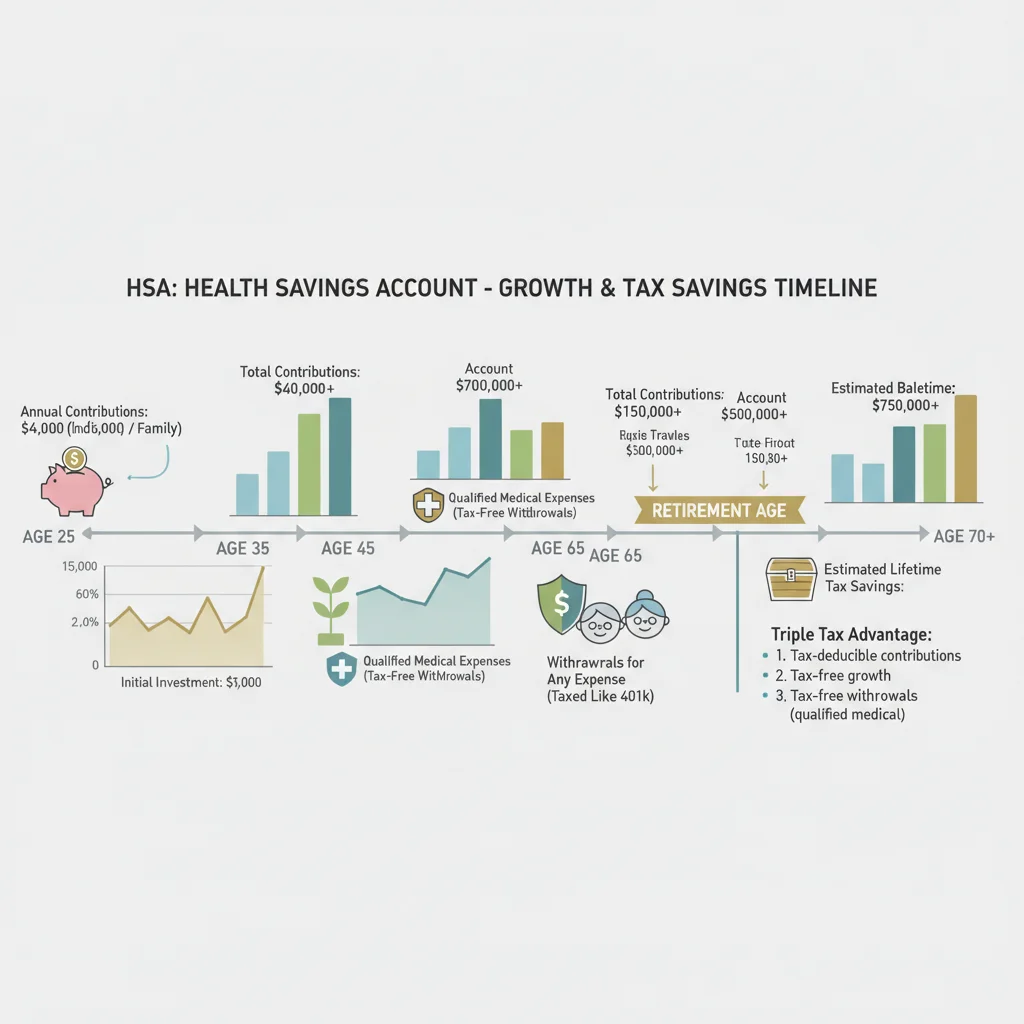
Before diving into advanced HSA Optimization 2026 strategies, it’s crucial to revisit the fundamental advantages that make HSAs so compelling. An HSA is a tax-advantaged savings account that can be used with a High-Deductible Health Plan (HDHP). Its ‘triple tax advantage’ is what truly sets it apart:
- Tax-Deductible Contributions: Money you contribute to your HSA is tax-deductible, reducing your taxable income in the year you contribute. This is an immediate saving.
- Tax-Free Growth: Any earnings from investments within your HSA grow tax-free. This allows your money to compound more rapidly over time, significantly enhancing your long-term wealth.
- Tax-Free Withdrawals: Qualified medical expenses can be paid for with tax-free withdrawals at any time. After age 65, withdrawals for non-medical expenses are taxed as ordinary income, similar to a traditional IRA, but without the 20% penalty for non-medical withdrawals before 65.
These benefits combined make the HSA an unparalleled financial vehicle, often referred to as ‘the most powerful retirement account’ by financial advisors. For 2026, staying abreast of potential contribution limit adjustments and regulatory nuances will be key to effective HSA Optimization 2026.
Eligibility and Contribution Limits for 2026 (Projections)
Eligibility for an HSA is tied directly to enrollment in a High-Deductible Health Plan (HDHP). For 2026, while official IRS figures are typically released later in the year, we can project based on historical adjustments for inflation. To qualify as an HDHP, a plan must meet specific deductible and out-of-pocket maximum thresholds. For instance, in recent years, the minimum deductible for self-only coverage has been around $1,600, with family coverage around $3,200. The out-of-pocket maximums have also been capped, approximately $8,050 for self-only and $16,100 for family coverage.
Anúncios
Contribution limits are equally important for HSA Optimization 2026. In 2024, the limits were $4,150 for self-only coverage and $8,300 for family coverage, with an additional $1,000 catch-up contribution for those aged 55 and over. Given historical inflation adjustments, it’s reasonable to anticipate these limits will increase slightly for 2026. For example, self-only contributions might rise to approximately $4,300-$4,400, and family contributions to around $8,600-$8,800. The catch-up contribution for those 55 and older is statutory and unlikely to change. Always consult the official IRS publications for the definitive 2026 figures once they are released to ensure full compliance and maximize your contributions.
Advanced Contribution Strategies for HSA Optimization 2026
1. Maximize Annual Contributions
The cornerstone of any effective HSA Optimization 2026 strategy is to contribute the maximum allowable amount each year. This not only capitalizes on the immediate tax deduction but also supercharges the tax-free growth potential. Many employers offer the convenience of payroll deductions, which means your contributions are made with pre-tax dollars, providing an immediate tax benefit without waiting for tax season.
2. The ‘Last-Month Rule’ for Pro-Rata Contributions
If you enroll in an HDHP mid-year, the ‘last-month rule’ allows you to contribute the full annual HSA contribution limit, provided you remain covered by an HDHP for the entire following 12-month period (the ‘testing period’). This can be a significant advantage for those transitioning to an HDHP, allowing for accelerated savings. However, failing to maintain HDHP coverage throughout the testing period can result in the excess contributions being treated as taxable income and subject to a 20% penalty.
3. Leveraging the Catch-Up Contribution
For individuals aged 55 and older, the additional $1,000 catch-up contribution is a golden opportunity to further boost savings. Both spouses, if over 55 and covered by a family HDHP, can make this catch-up contribution, provided each spouse opens their own HSA account. This effectively adds $2,000 to the family contribution limit, significantly enhancing HSA Optimization 2026 for those nearing retirement.
Strategic Investment within Your HSA
One of the most powerful, yet often underutilized, aspects of an HSA is its investment capability. Unlike a flexible spending account (FSA), your HSA funds roll over year after year and can be invested in a wide range of assets, similar to a 401(k) or IRA. This is where the ‘tax-free growth’ truly shines, turning your HSA into a formidable retirement savings vehicle.
1. Choose an HSA Provider with Robust Investment Options
Not all HSA providers are created equal. Some offer only basic savings accounts, while others provide access to a full suite of investment options, including mutual funds, ETFs, and even individual stocks. When selecting or reviewing your HSA provider for HSA Optimization 2026, prioritize one that offers:
- Low Fees: High administrative or investment fees can erode your returns over time.
- Diverse Investment Choices: A broad selection allows you to build a diversified portfolio aligned with your risk tolerance and financial goals.
- Low or No Minimums: Some providers require a minimum cash balance before you can invest, which can limit your investment potential.
2. Adopt a Long-Term Investment Strategy
For those who can afford to pay for current medical expenses out-of-pocket, the optimal strategy for HSA Optimization 2026 is to invest the funds for the long term. Treat your HSA as an additional retirement account. The longer your money has to grow tax-free, the more substantial your nest egg will become. Consider a diversified portfolio that leans towards growth-oriented assets, especially if retirement is decades away.
3. Rebalancing Your HSA Portfolio
Just like any other investment account, periodically rebalancing your HSA portfolio is crucial. As market conditions change and your financial goals evolve, you may need to adjust your asset allocation to maintain your desired risk level. Regular reviews, perhaps annually, will ensure your HSA investments remain on track for optimal HSA Optimization 2026 and beyond.
Strategic Withdrawal Strategies: The Healthcare Expense Reimbursement Powerhouse
While investing your HSA funds for the long term is a powerful strategy, understanding how to strategically withdraw funds is equally important. The ability to withdraw funds tax-free for qualified medical expenses is a core benefit. However, the true genius of an HSA lies in its flexibility regarding when you claim those reimbursements.
1. The ‘Pay-Me-Back’ Strategy (Receipt Hoarding)
One of the most advanced and effective HSA Optimization 2026 strategies is to pay for current medical expenses out-of-pocket and meticulously save all your receipts. You can then let your HSA funds grow and compound tax-free for years, even decades. Later, perhaps in retirement when your tax bracket might be lower or when you need a significant cash infusion, you can reimburse yourself for all those accumulated qualified medical expenses, completely tax-free. There is no time limit on when you can reimburse yourself for past qualified medical expenses, as long as the expense was incurred after your HSA was established.
Key to this strategy:
- Meticulous Record Keeping: Digitize and organize all medical receipts. Keep track of the date, service, provider, and amount.
- Sufficient Cash Flow: This strategy requires you to have enough personal cash flow to cover current medical expenses without dipping into your HSA.
- Qualified Expenses Only: Ensure all saved receipts are for legitimate qualified medical expenses as defined by the IRS.
2. Using HSA Funds in Retirement
For many, the HSA truly shines as a retirement planning tool. Healthcare costs in retirement can be substantial, and your HSA can cover a wide array of expenses, including Medicare premiums (Parts A, B, C, and D), dental, vision, prescription drugs, and even long-term care insurance premiums (up to certain limits). By age 65, your HSA essentially functions like a traditional IRA, meaning withdrawals for non-medical expenses are taxed as ordinary income, but without the 20% penalty. This flexibility makes it an incredibly versatile component of your retirement portfolio, further emphasizing the importance of HSA Optimization 2026.
Navigating Potential Regulatory Changes for 2026
While the core structure of HSAs has remained stable, minor legislative adjustments or inflationary updates are always possible. For HSA Optimization 2026, it’s prudent to:
- Stay Informed: Regularly check official IRS publications and reputable financial news sources for any changes to contribution limits, eligible expenses, or HDHP definitions.
- Consult a Professional: A financial advisor specializing in healthcare planning can provide personalized advice and keep you updated on any legislative impacts.
No major overhauls of the HSA structure are currently anticipated, but even small adjustments can impact your optimization strategy. For example, changes to what constitutes a ‘qualified medical expense’ could affect your reimbursement strategy.
Common Pitfalls to Avoid in HSA Optimization 2026
1. Not Investing Your HSA Funds
Leaving your HSA funds solely in a low-interest savings account is arguably the biggest missed opportunity. The power of tax-free growth is immense, especially over decades. If you’re not investing, you’re missing out on a significant portion of the HSA’s potential for wealth accumulation. Make sure to explore the investment options offered by your HSA provider.
2. Mismanaging Qualified Medical Expenses
It’s crucial to understand what constitutes a ‘qualified medical expense’ according to IRS guidelines. Using HSA funds for non-qualified expenses before age 65 results in both income tax and a 20% penalty. After age 65, non-qualified withdrawals are only subject to income tax. Always verify if an expense is qualified before making a withdrawal, especially if you’re using the ‘pay-me-back’ strategy.
3. Not Reaching Your Deductible Annually (Psychological Barrier)
Some individuals with HDHPs are hesitant to seek necessary medical care because of the high deductible. While it’s wise to be cost-conscious, delaying or avoiding essential care can lead to more serious health issues and higher costs down the line. Remember that your HSA is there to help you manage these costs, and preventive care is often covered before the deductible, even in an HDHP.
4. Neglecting the Catch-Up Contribution
If you’re 55 or older, failing to make the catch-up contribution is leaving money on the table. This extra $1,000 (or $2,000 for a couple) can significantly boost your HSA balance and provide more funds for future healthcare costs in retirement. It’s a simple yet powerful element of effective HSA Optimization 2026.

Integrating Your HSA into Your Overall Financial Plan
For truly holistic HSA Optimization 2026, your HSA shouldn’t be viewed in isolation. It needs to be integrated seamlessly into your broader financial strategy, working in conjunction with your 401(k), IRA, and other investment accounts.
1. Prioritizing Contributions
Many financial experts suggest a hierarchy for savings: first, contribute enough to your 401(k) to get the full employer match; second, maximize your HSA contributions; third, maximize IRA contributions (Roth or Traditional); and fourth, maximize any remaining 401(k) contributions. This order prioritizes accounts with the most immediate and powerful tax advantages, with the HSA often ranking very high due to its triple tax benefits.
2. Aligning with Retirement Goals
Consider your projected healthcare costs in retirement. Fidelity estimates that a 65-year-old couple retiring today would need approximately $315,000 for healthcare expenses throughout retirement. While this figure can vary, it underscores the critical role an HSA can play. By strategically investing your HSA, you’re building a dedicated fund specifically designed to meet these potentially significant costs, preserving your other retirement assets for living expenses and discretionary spending.
3. Estate Planning Considerations
While often overlooked, HSAs also have estate planning implications. Upon your death, if your spouse is the designated beneficiary, the HSA can simply transfer to them, retaining its tax-advantaged status. If a non-spouse is the beneficiary, the account ceases to be an HSA and becomes taxable to the beneficiary. Understanding these rules is an important part of comprehensive HSA Optimization 2026.
Case Studies in HSA Optimization 2026
Case Study 1: The Young Professional
Sarah, 30, is single and in excellent health. She opts for an HDHP with an HSA. Her strategy for HSA Optimization 2026 is to contribute the maximum self-only amount each year and invest it aggressively in low-cost index funds. She pays for her occasional doctor’s visits and prescriptions out-of-pocket, diligently saving all receipts. By age 65, assuming an average 7% annual return, her HSA could grow into a substantial six-figure sum, providing a tax-free reservoir for her retirement healthcare needs, or even a tax-advantaged income source if she has sufficient receipts.
Case Study 2: The Mid-Career Family
The Miller family, both in their early 40s with two children, are covered by a family HDHP. Their HSA Optimization 2026 strategy involves maximizing family contributions. They use a portion of their HSA funds for predictable healthcare expenses like annual check-ups and orthodontics for their children, but they also invest a significant portion. They maintain a separate emergency fund for unexpected medical costs, allowing their invested HSA funds to grow. They are also meticulous about scanning and saving receipts for expenses they pay out-of-pocket, building a future reimbursement pool.
Case Study 3: Pre-Retiree Leveraging Catch-Up Contributions
John, 58, is looking ahead to retirement in seven years. He and his wife, also 58, both qualify for the catch-up contribution. Their HSA Optimization 2026 plan is to contribute the maximum family amount plus both catch-up contributions. They have paid for most medical expenses out-of-pocket for years and have a substantial backlog of receipts. They are now strategically liquidating some of their older, less-performing investments to fund their HSA to its maximum, taking advantage of the tax deduction and ensuring a robust healthcare fund for their retirement.
Future Outlook and Conclusion
The Health Savings Account remains an indispensable tool for financial planning, offering a unique blend of tax advantages for healthcare and retirement savings. As we move into 2026, the principles of maximizing contributions, investing wisely, and employing strategic withdrawal methods will continue to be paramount for effective HSA Optimization 2026.
By staying informed about regulatory updates, choosing the right HSA provider, and integrating your HSA into your broader financial plan, you can unlock its full potential. Whether you’re a young professional just starting your career or nearing retirement, a well-optimized HSA can significantly enhance your financial security, providing peace of mind regarding future healthcare costs and contributing substantially to your overall wealth accumulation.
Don’t let the complexities deter you. With careful planning and consistent effort, your HSA can become one of the most valuable assets in your financial portfolio. Start implementing these HSA Optimization 2026 strategies today to secure a healthier and wealthier tomorrow.